

Table of Contents
ToggleA master bathroom remodel is one of the highest-returning home improvement investments, not just for resale value, but for daily quality of life. Whether you’re refreshing outdated fixtures or completely reimagining the space, a thoughtful master bathroom layout can transform a purely functional room into a personal sanctuary. Modern luxury bathroom design doesn’t require unlimited budget: strategic choices in fixtures, materials, and lighting create high-end results on realistic timelines. This guide walks through eight practical approaches to master bathroom remodel ideas that work whether you’re tackling cosmetic updates or a full gut renovation.
Key Takeaways
- Master bathroom remodel ideas focused on spa-like fixtures—like rainfall showerheads and freestanding soaking tubs—deliver luxury without excessive water consumption or complex installation.
- Smart storage solutions such as floating vanities, wall-mounted shelving, and recessed niches maximize space and make even smaller master bathroom layouts feel larger.
- Timeless materials like large-format tile, polished concrete, and quality wood cabinetry age gracefully and reduce the need for costly updates over 10+ years.
- Layered lighting with warm 3000K color temperature for task lighting and dimmers for ambiance transforms your bathroom from purely functional to genuinely relaxing.
- Luxury master bathroom remodel elements—heated floors, frameless glass enclosures, and statement fixtures—can be phased over time or replaced with budget-friendly alternatives like heated towel racks and semi-frameless designs.
- Professional installation is essential for electrical and plumbing work; proper planning upfront prevents costly mistakes and ensures safety compliance with NEC codes.
Create a Spa-Like Retreat With Modern Fixtures
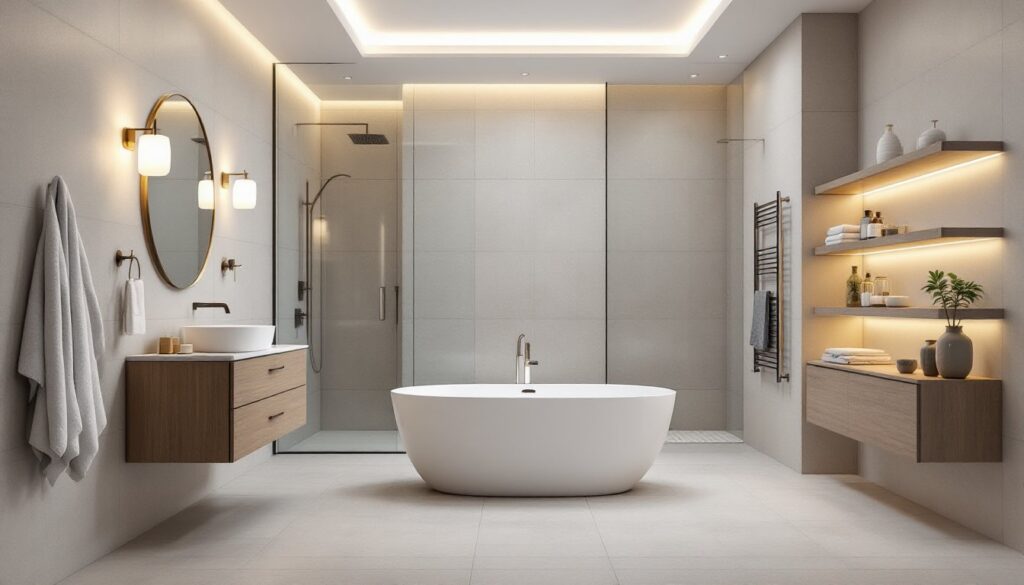
A spa-like master bathroom starts with thoughtful fixture selection and water delivery. Rainfall showerheads with 2.0 GPM flow rates (or lower) paired with body jets deliver luxury without excessive water use or pressure-balancing valve complexity. Free-standing soaking tubs, especially acrylic or cast iron models, anchor the room and justify larger square footage. Position the tub away from the shower zone to prevent splashing and create visual separation.
Tile and surround materials matter more than you’d think. Large-format tiles (18″ × 36″ or bigger) in the shower surround minimize grout lines and create a seamless, high-end look. Consider porcelain or natural stone, both withstand moisture better than ceramic. If choosing stone (marble, limestone, slate), apply penetrating sealer on first install and reseal every 12 months: stone requires more maintenance than engineered alternatives.
Vanity depth should match your space. Standard vanities are 21 inches deep: wall-mounted or floating designs use only 18–20 inches, freeing floor area. Undermount sinks pair well with solid-surface countertops (quartz, concrete) and eliminate the ledge where dirt collects. A single-hole or two-hole faucet, depending on design preference, with a brushed nickel or matte black finish resists water spotting longer than polished chrome.
Maximize Space With Smart Storage Solutions
Storage often separates a functional master bathroom layout from one that feels cramped. Recessed medicine cabinets above the sink save wall extension, but angled mirrors (tilt-down designs) prevent head bumps. For larger bathrooms, built-in niches, framed during drywall install and tiled flush with the shower wall, hold toiletries without eating floor space.
Floating Vanities and Wall-Mounted Shelving
Floating vanities are more than aesthetic: they let you see the full floor, making even smaller bathrooms feel larger. Ensure wall studs are at 16-inch centers, vanities need solid backing, typically a cleat secured to studs rated for 50+ pounds of load. Wall-mounted shelving above the toilet or beside the vanity uses vertical real estate without traffic obstruction. Open shelving shows off rolled towels and glass storage jars: enclosed cabinets work better if daily clutter is a reality.
Drawer organizers keep the undervanity usable. Pull-out bins for hair tools, cosmetics, and medications prevent chaotic piling. A linen tower or tall cabinet, even 24 inches wide, tucks beside the toilet and stores extra towels, paper products, and cleaning supplies. Bathroom storage is never wasted: plan for 1.5 to 2 linear feet of accessible storage per person using the space regularly.
Choose Timeless Materials and Finishes
Luxury bathroom interior design leans on materials that age gracefully. Concrete, tile, stone, and quality cabinetry outlast trendy paint colors and wallpaper. Concrete countertops and floors, polished to a matte or satin finish, feel industrial-modern and hide fingerprints better than glossy surfaces. If polished concrete floors worry you about slipping, add a non-slip coating or choose textured concrete finishes.
Tile selection defines the space. Subway tiles in matte finish feel less clinical than glossy. Large neutral tiles in shower surrounds (greige, soft gray, warm white) pair with accent colors in accessories that you can swap. Hexagon floor tiles in light gray or white marble mimic high-end designs without marble’s maintenance burden if you use porcelain lookalikes. Avoid very small tiles (mosaic) unless the look aligns with your design: grout lines date quickly and trap mold if not sealed properly.
Cabinetry in natural wood or painted finishes should match or complement flooring. White, soft gray, and natural wood tones are timeless. Plywood or solid wood construction, not particleboard, resists moisture and warping. Finish cabinet interiors with moisture-resistant paint, and install toe-kick heat vents or leave gaps for under-cabinet ventilation to prevent rot. Design ideas for master bathroom finishes should prioritize durability: you’ll live with these choices for 10+ years.
Upgrade Lighting for Function and Ambiance
Layered lighting transforms a bathroom from purely utilitarian to genuinely relaxing. Task lighting around the vanity mirror needs to be bright and shadow-free: 25–40 watts of LED equivalent per side (two sconces, one above) prevents unflattering shadows across the face. Color temperature matters, use 3000K (warm white) for early morning confidence, not the clinical 5000K (daylight) that belongs in kitchens.
Ambiance lighting, recessed downlights on a dimmer or wall sconces, lets you shift mood. Dimmer switches are essential: hardwired fixtures without dimmers lock you into one brightness. If you’re installing new recessed lights, use IC-rated (insulation contact) trims so insulation can blanket them without fire risk. Ventilation fans with integrated lighting serve two functions in tight spaces.
For high-end luxury master bathroom ideas, consider soffit lighting around the ceiling perimeter or under floating vanities. LED strip lights (warm white, 3000K) create indirect glow without glare. Bathroom lighting should include GFCI protection on all outlets within 6 feet of water sources per NEC: hire a licensed electrician if rewiring isn’t in your wheelhouse. Never DIY bathroom electrical unless you’re experienced: moisture and electricity demand professional work.
Add Luxury Elements on Any Budget
Luxury doesn’t require a mansion luxury master bathroom budget. High-end bathroom remodel principles focus on a few statement pieces rather than scattered upgrades. A frameless glass shower enclosure costs more upfront but looks premium and simplifies cleaning, no framed corners trapping soap residue. If budget is tight, a semi-frameless design (frame only at top and bottom) cuts 30–40% off the cost while maintaining the clean aesthetic.
Warmth underfoot elevates the entire experience. Radiant floor heating (electric or hydronic) costs $1,500–$3,500 for a typical master bath but is a one-time install during remodel. If that’s out of reach, heated towel racks and plush rugs create the same luxury feeling. Luxury master bathroom remodel ideas often include heated bathroom mirrors (prevent fogging) and heated seats on bidets, small touches with outsized comfort impact.
Budget-friendly luxury comes from details: matte black or brushed brass hardware, a statement light fixture, plants in corner shelving, or a curated collection of candles. High-end bathroom remodel contractors often recommend one or two splurge items (the soaking tub, the tile treatment) and balanced spending elsewhere. You can also spread costs over phases, year one, refreshed fixtures and paint: year two, tile surround: year three, lighting upgrades. Platforms like Remodelista and Houzz curate real-world master bathroom layout examples showing how designers achieve luxury at multiple price points. Home renovation cost guides help set realistic budgets before you start.
Conclusion
A successful master bathroom remodel balances aesthetics, function, and durability. Start with a solid master bathroom layout that maximizes your square footage, invest in timeless materials that age well, and layer lighting to shift between energized mornings and relaxing evenings. Whether you’re drawn to spa-like modern fixtures, smart storage, or luxury elements on a realistic budget, the best remodel is one that you’ll genuinely enjoy using daily. Plan ahead, don’t skip surface prep or material acclimation, and honestly assess what you can DIY versus what demands licensed professionals, especially electrical and plumbing work.