

Table of Contents
ToggleModern café design has evolved beyond mere coffee service, it’s now a carefully curated experience that blends function with aesthetics. Whether you’re opening a new café or refreshing an existing one, understanding current interior design trends is essential to attracting and retaining customers. In 2026, the focus has shifted toward sustainable materials, minimalist layouts, and intentional lighting that creates genuine ambiance without sacrificing usability. This guide walks through seven trending ideas that define successful modern café interiors today, giving you actionable strategies to transform your space into a destination worth visiting.
Key Takeaways
- Modern café interior design combines minimalist layouts with open spaces and intentional spacing to improve customer comfort, staff efficiency, and the perception of space size.
- A neutral color foundation paired with one or two bold accent colors—such as forest green or rust—creates visual interest while maintaining the calm, welcoming atmosphere essential to contemporary cafés.
- Sustainable materials like reclaimed wood, recycled metal, and low-VOC paints resonate with modern customers while often performing better and lasting longer than cheaper alternatives.
- Layered lighting with ambient, task, and accent components at appropriate color temperatures (2700K for customer areas, 3000-4000K for work surfaces) balances ambiance with functionality.
- Mixing furniture types—bar stools, bistro tables, and lounge seating—accommodates different customer needs while durable materials like leather and performance fabrics withstand high-traffic café environments.
- Transparent, open-kitchen designs and vertical storage solutions maintain the minimalist aesthetic while building customer trust and improving navigation throughout the space.
Minimalist Layouts and Open Spaces
Modern cafés thrive when they embrace negative space and clear sightlines. Unlike crowded, cluttered designs, minimalist layouts encourage customers to move comfortably and find their preferred seating without feeling cramped or overwhelmed.
A smart minimalist café removes visual noise by limiting furniture pieces, reducing wall decorations, and creating breathing room between tables and counters. This approach doesn’t mean empty or cold, it means every object serves a purpose. Think of your café like a well-organized kitchen: only the tools you use daily stay on the counter.
Open layouts also improve staff efficiency. When baristas can see the entire floor and move between stations without obstruction, they serve faster and safer. Navigation becomes intuitive for customers too. Spacing tables at least 3 feet apart (more in high-traffic zones) reduces congestion during peak hours and makes the space feel larger than it actually is.
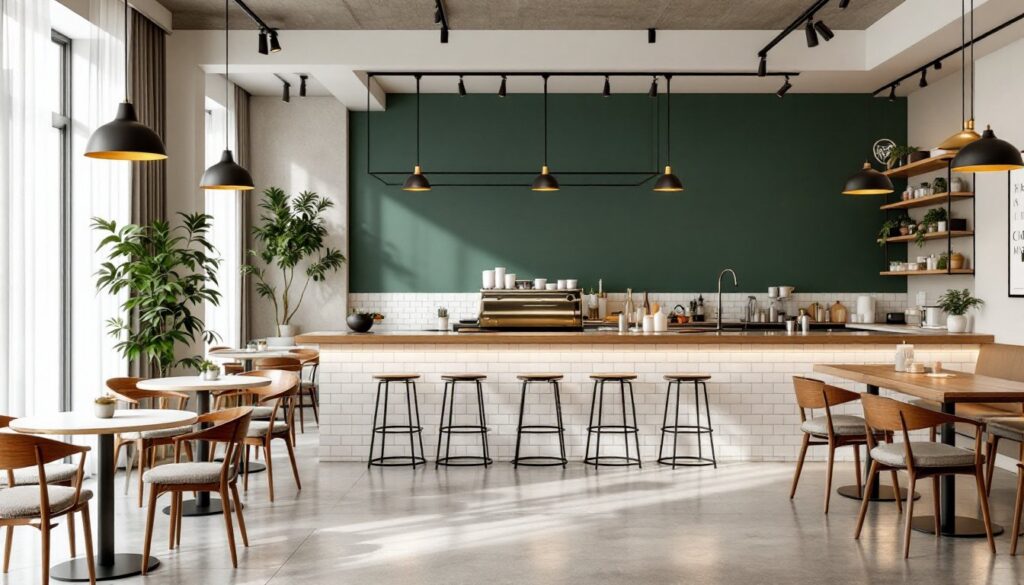
Consider a central-island counter design that opens the kitchen area rather than hiding it behind a wall. This transparency builds trust and creates a theater-like atmosphere where customers watch drinks being made. Vertical storage solutions, wall-mounted shelving, floating cabinets, keep essential items accessible while maintaining floor-level clarity.
When planning layout, measure twice and walk the space several times as a customer. You’ll catch bottlenecks and dead zones that floor plans miss. A successful minimalist café feels effortless to navigate and never feels empty, just intentional.
Color Palettes That Define Contemporary Cafés
Neutral Foundations and Bold Accents
A foundational palette of warm neutrals, soft whites, warm grays, natural beige, and muted taupes, sets the tone for modern café design. These colors feel welcoming without being sterile, and they let customers focus on their coffee and company rather than being distracted by competing hues.
Neutrals work as a canvas for bold, intentional accents. A deep forest green accent wall, terracotta trim, or rust-colored geometric tiles add personality without overwhelming the space. The key is restraint: choose one or two bold colors and commit to them through paint, tile, furniture, or art.
Color psychology matters in café design. Warm neutrals with deep green or charcoal accents feel grounded and sophisticated. Soft whites paired with warm copper or brass hardware feel modern and upscale. Modern home decor trends show that layered neutral palettes, combining different shades of white, gray, and tan, create visual interest while keeping the atmosphere calm.
Consider how natural light changes color throughout the day. A soft gray that looks welcoming at 7 a.m. might feel cold under harsh afternoon sun without supplemental warm lighting. Test paint samples on your walls at different times before committing. Your café’s color story should feel cohesive from entry through seating areas to the pastry display.
Bold accents also guide the eye. A striking color on the bar counter, in a tile pattern on the floor, or in artwork draws customers deeper into the space and creates focal points that photographs, and social media posts, highlight naturally.
Material Selection and Sustainable Choices
Wood, Metal, and Eco-Friendly Finishes
Modern café interiors balance durability with aesthetic warmth, and that balance starts with material choice. Hardwoods, especially reclaimed or sustainably harvested oak, walnut, or ash, create a welcoming foundation. Natural wood grain tells a story that laminate or veneer simply can’t replicate, and it ages beautifully when properly maintained.
For countertops and bar surfaces, solid wood or engineered stone (quartz, sintered stone) outperforms cheaper alternatives in a high-traffic café. Quartz resists staining and scratching better than natural marble and costs less long-term due to durability. A butcher-block countertop adds warmth but requires regular sealing to prevent water damage, acceptable if you’re willing to maintain it.
Metal accents, brushed brass, matte black steel, or powder-coated aluminum, add contemporary edge. Metal shelving, frame details on furniture, and hardware should share a consistent finish to feel intentional. Mixing finishes creates visual chaos: sticking to one primary metal tone (brass or black, not both) keeps the design coherent.
Sustainable material choices resonate with modern café customers. Reclaimed wood, recycled metal, low-VOC paints, and sustainably sourced stone aren’t just trend-chasing, they reduce environmental impact and often perform better than virgin materials. A café that sources reclaimed barn wood for accent walls or uses recycled plastic composite for outdoor furniture tells customers their money supports responsible practices.
Flooring deserves special attention. Polished concrete with radiant heating is durable, affordable, and very on-trend. Ceramic tile in geometric patterns adds visual interest and handles spills easily. Avoid carpet in cafés, it absorbs odors, stains permanently, and traps moisture from humidity and cleaning.
When selecting materials, compare interior design examples from similar establishments to see how choices hold up over time. Durable, honest materials, wood that can be refinished, metal that develops patina, stone that improves with age, feel more sophisticated than materials that look dated after a few years.
Lighting Design for Ambiance and Functionality
Lighting in a modern café must do two jobs simultaneously: create an inviting atmosphere and provide enough light for customers to read menus, work on laptops, and baristas to execute orders precisely. The best café lighting feels ambient but isn’t mysterious.
Layer your lighting with three types: ambient (overhead), task (bar counter, seating areas), and accent (wall sconces, feature pendants). Ambient lighting should be dimmable and set to around 2700K color temperature, warm, nearly yellow-white light that feels comfortable for extended periods. Avoid harsh white (5000K+) which feels institutional.
Task lighting over the counter requires brighter, more neutral light (3000-4000K) so baristas can read measurements, see espresso pull accurately, and work safely. Under-cabinet strips or recessed lights focused on work surfaces eliminate shadows without spilling glare into the customer area.
Accent lighting, pendant lights over seating areas, sconces on walls, or uplighting on architectural features, creates visual interest and draws the eye around the space. Modern café designs often feature sculptural pendant lights in matte black, brushed brass, or handblown glass that double as art pieces.
Consider daylighting too. If your café has windows, use them strategically. Sheer curtains filter harsh direct sun while maintaining the view. During overcast days, supplement with warm overhead lights. At night, your artificial lighting becomes more prominent, so ensure transitions between daylight and evening feel smooth and intentional.
LED technology has made quality warm-light fixtures affordable. Energy-efficient LEDs reduce operating costs while delivering the warm glow customers expect. Avoid cheap LEDs with poor color rendering, they make food look unappetizing and create an unpleasant environment.
Furniture and Seating Arrangements
Café furniture must balance style with practicality. Customers sit for 30 minutes to three hours, so comfort is non-negotiable, a beautiful chair that causes back pain on your second visit loses customers.
Modern cafés typically mix seating types: tall stools at bar counters for quick service, mid-height bistro tables for pairs, and deeper lounge seating for longer sessions. This variety accommodates different customer needs without requiring massive inventory.
Material matters. Upholstered chairs with mid-century modern lines feel contemporary without being trendy. Walnut or ash wood frames age better than cheap stained plywood. Metal frames in matte black or brushed brass coordinate well with industrial-style cafés. Leather or performance fabric upholstery cleans easily and hides wear, important in a high-use space.
Table height and size deserve attention. Standard dining is 30 inches high: bar seating sits 36-42 inches. Tables for two should be 24-30 inches across, large enough for a laptop and coffee cup but intimate. Tables for four should be 30-36 inches square. Avoid small, wobbly tables: they frustrate customers and waste space.
Arrange seating to encourage organic flow. Corner nooks and alcoves feel cozy and suit solo customers or small groups. Long communal tables invite conversation and work well in trendy café concepts. Keep high-traffic routes clear and avoid creating dead zones where furniture sits awkwardly.
Consider the best interior design ideas for various seating styles, then source furniture that matches your café’s vibe. A contemporary minimalist café benefits from clean-lined Scandinavian furniture: a warm, artsy café can embrace mid-century vintage pieces. Consistency across the space matters more than individual pieces being “designer.”
Upkeep is real. Leather and performance fabrics resist staining better than natural fibers. Wood finishes need refinishing every few years in high-traffic areas. Budget maintenance into your design choices rather than discovering a year in that your furniture wasn’t practical for commercial use.