

Table of Contents
ToggleModernism interior design isn’t about cold, sterile rooms or sparse minimalist apartments you see in magazines. It’s a thoughtful approach to creating spaces that feel intentional, functional, and genuinely livable. If you’ve admired sleek furniture, uncluttered layouts, and rooms that seem to breathe, you’ve likely seen modernism in action. This design philosophy emerged in the early 20th century and remains one of the most influential movements shaping how homeowners think about their living spaces today. Whether you’re planning a full renovation or refreshing a single room, understanding modernism’s core principles can help you make smarter design choices that stand the test of time.
Key Takeaways
- Modernism interior design prioritizes functionality and honest materials over unnecessary decoration, creating intentional spaces where every element serves a clear purpose.
- The principle of ‘form follows function’ means starting with practical needs—comfort, storage, lighting—so aesthetics follow naturally and you invest in pieces you’ll actually use.
- Neutral color palettes (whites, grays, beiges) paired with bold strategic accents and high-quality materials like wood, concrete, and glass define the modernist aesthetic.
- Open spaces, hidden storage, and built-in cabinetry with clean sightlines create visual calm and make rooms feel larger without appearing cold or sterile.
- Modernism differs from contemporary design by being a timeless historical movement rooted in strict design principles, while contemporary design shifts with current trends.
- Authentic modernist spaces feel calm and livable when balanced correctly—blending clean lines and neutral bases with intentional design choices that stand the test of time.
What Is Modernism Interior Design?
Modernism interior design is a design movement that prioritizes simplicity, functionality, and honest use of materials. Born in the early 1900s as a reaction against ornate Victorian and Art Deco styles, modernism strips away unnecessary decoration and focuses on what actually matters: livability and purpose.
At its core, modernism asks a straightforward question: why should a room have it? Every element, from furniture to lighting to paint color, should earn its place by serving a function or contributing meaningfully to the space. This isn’t about sterility: it’s about clarity. The movement influenced everything from architecture to product design, and today, modernism remains deeply relevant for homeowners looking to create intentional, sophisticated spaces.
Modernist spaces typically feature Interior Design vs Interior Decorating: Key Differences Explained because they blend both structure and aesthetics. Rather than treating design as an afterthought, modernism treats the entire room as a cohesive whole where layout, materials, and finishes work together from the start. This approach works whether you’re updating a kitchen, bedroom, or open living area.
Core Principles of Modernist Design
Form Follows Function
This is the golden rule of modernism, coined by architect Louis Sullivan. A chair should be comfortable and structurally sound before it’s beautiful. A lighting fixture should illuminate effectively before its design statement matters.
In practice, this means asking yourself hard questions: Does this table actually fit how I use the room? Will this shelving system hold what I need to store? Is this paint color going to feel right in morning light? When you start with function, aesthetics follow naturally. A well-proportioned sofa with clean lines becomes beautiful because it’s designed to work. A built-in shelf system looks sophisticated because it solves a real storage problem without clutter or wasted space.
This principle saves money too. You avoid buying decorative pieces that don’t serve you, and you invest in quality items you’ll actually use daily.
Minimalism and Open Space
Modernism embraces negative space, the empty air around objects, as actively as it does furniture itself. This doesn’t mean your home should feel empty or cold. It means being intentional about what you include.
Open floor plans, high ceilings, and uncluttered surfaces create visual calm and make rooms feel larger than they are. If your interior design for beginners phase taught you anything, it’s probably that less stuff actually makes spaces feel better. Modernism takes this further by treating white wall space, bare wooden floors, and simple built-ins as design features, not lazy shortcuts.
Practically speaking, minimalism means storage solutions should be hidden or built-in. Shelving displays should feature only items you genuinely use or love. Wall-to-wall clutter, novelty collections, and purely decorative objects get replaced with carefully chosen pieces that anchor a room.
Key Design Elements to Master
Color Palettes and Materials
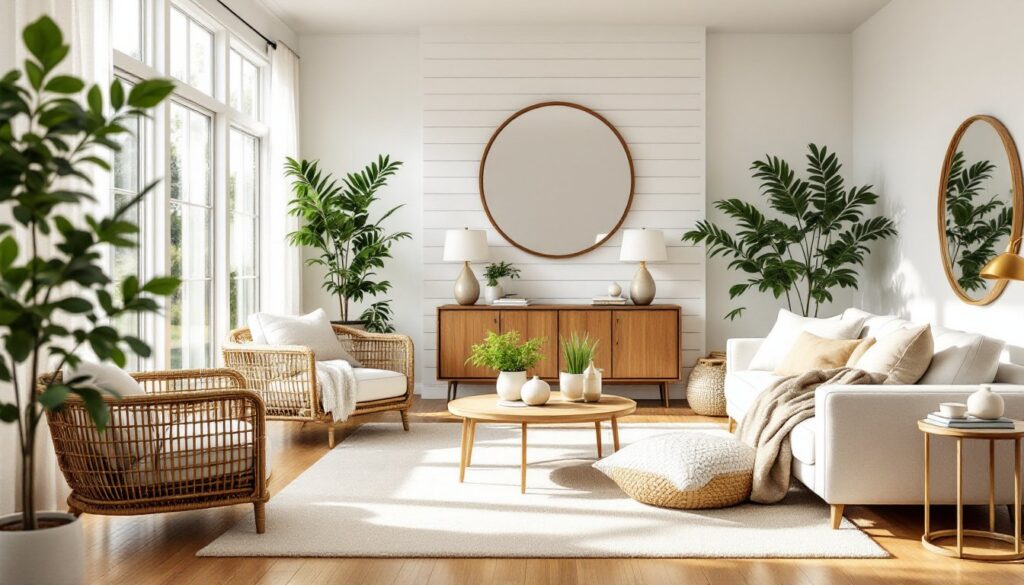
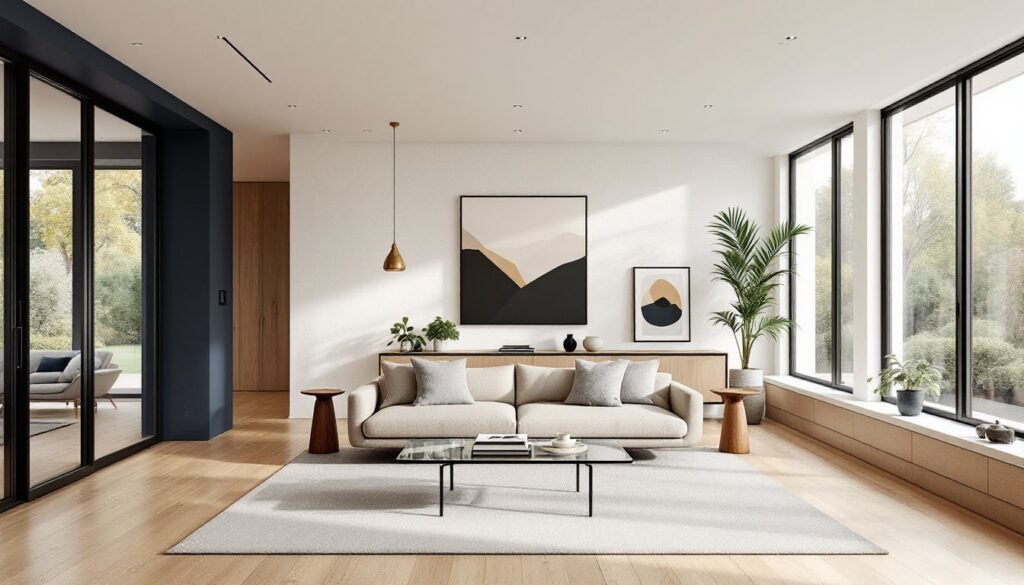
Modernist color palettes are typically neutral and restrained: whites, soft grays, warm beiges, and blacks. These form the foundation. When color does appear, it’s often as a bold, strategic accent, a single wall in deep blue, a bright red door, or colorful modern artwork as a focal point.
The beauty of neutral palettes is flexibility. You can shift your accent color seasonally with throw pillows or art without feeling like you need to repaint. Lighter neutrals (creams, soft whites, pale grays) make spaces feel open and airy. Warmer grays and beiges add coziness without abandoning the modernist aesthetic.
When it comes to materials, modernism celebrates honest, high-quality surfaces: raw wood, polished concrete, stainless steel, glass, and quality paint finishes. Materials should look like what they are, wood should feel like wood, not be disguised with heavy stain or gilt. Metal fixtures should be genuine metal, not plastic attempts at chrome.
Floor materials matter significantly. Polished concrete, light wood, or large-format tile creates the clean, continuous lines modernism favors. Avoid busy patterns or heavy textures that compete visually. If hardwood isn’t in the budget, quality laminate or vinyl plank that mimics natural wood works well and offers practical durability for busy homes.
Furniture should feature simple, geometric silhouettes. Look for pieces with tapered legs (they visually lighten a room), clean edges, and minimal ornamentation. A sofa works better than a sectional if you’re keeping things streamlined. Upholstery in neutral tones, gray, charcoal, natural linen, anchors a room without demanding attention.
Lighting design deserves its own category. Recessed ceiling lights, pendant fixtures with simple geometric shapes, and task lighting like wall-mounted sconces create layers without clutter. Avoid ornate chandeliers or busy fixture designs. Pendant lights over a kitchen island should be simple and sculptural, not ornately decorated.
Built-in storage and cabinetry are modernist staples. Custom shelving with hidden hardware (pocket doors on cabinetry, cleats rather than visible brackets) maintains clean sightlines. If you’re browsing recent Interior Design Trends 2026, you’ll notice built-ins are having a major moment because they solve both function and aesthetics simultaneously.
Modernism vs. Contemporary Design: Understanding the Difference
People often use “modernism” and “contemporary” interchangeably, but they’re distinct. Modernism is a historical movement with specific principles and a defined era (roughly 1900s–1970s). Contemporary design is simply what’s current, it changes as design trends evolve.
A modernist room will feel timeless because it follows strict design rules that have held up for over a century. It’s restrained, geometric, and focused on honest materials and function. A contemporary room might borrow modernist principles but could also include curves, warmer colors, or eclectic pieces.
Think of modernism as the foundation. Contemporary design builds on it but feels fresher, more experimental. Modernism would keep a room neutral with one bold accent. Contemporary might layer multiple textures and softer colors. Top Interior Design Trends and Tips often feature contemporary spaces because they’re less rigid, they feel current without being dated next year.
For homeowners, the practical difference matters: modernism is an investment in timelessness. You won’t need to overhaul your space every few years. Contemporary lets you shift with trends more freely. Many designers actually blend both, using modernist bones (clean lines, functional layout, neutral base) with contemporary flexibility (softer colors, mixed textures, trend-forward accents). This hybrid approach gives you the longevity of modernism with the warmth of contemporary design.
When shopping for furniture and finishes, understanding this distinction helps you avoid trendy modernist knockoffs. Authentic modernist pieces, from brands rooted in the movement or contemporary makers honoring those principles, invest in quality construction. Sites like Dwell showcase both historical modernism and contemporary takes on the philosophy, making it easy to see the difference firsthand.
If you’re considering a full redesign, study authentic modernist examples before committing to the style. Look at Interior Design Examples: Inspiring Ideas and design publications like Decoist to see how modernism actually lives in real homes, not just in magazine spreads. You’ll notice successful modernist spaces feel calm and livable, not cold or museum-like. That’s when you know you’ve nailed it.