

Table of Contents
ToggleModern bohemian design is having a real moment in 2026, and it’s easy to see why. It blends the relaxed, free-spirited energy of traditional boho with clean lines and contemporary minimalism, creating a look that feels both thoughtfully curated and lived-in. Unlike Instagram-perfect interiors, boho-modern spaces are genuinely comfortable, layers of texture, warmth, and personality without the chaos. Whether someone’s overhauling a single room or reimagining their entire home, this style offers flexibility that works with existing furniture, respects a budget, and actually makes spaces feel like someone lives there. This guide walks through the core principles, essential pieces, and room-by-room strategies to nail modern bohemian design.
Key Takeaways
- Modern bohemian interior design blends free-spirited boho aesthetics with clean lines and contemporary minimalism, creating spaces that feel both curated and genuinely livable.
- Soft earthy neutrals like warm whites and creams form the foundation, while accent colors such as ochre, burnt orange, and muted jewel tones appear in artwork, textiles, and accessories rather than dominating walls.
- Layer different textures and materials—chunky knit throws, natural wood furniture, linen textiles, and woven baskets—to create visual interest while maintaining calm and breathing room.
- Boho-modern prioritizes natural materials, handmade pieces, and honest imperfection paired with intentional pattern use limited to 20–30% of the room to avoid visual chaos.
- Warm diffused lighting, abundant houseplants in clay pots, and sparse wall art with genuine function or sentimental value complete the aesthetic in every room.
- Modern bohemian design works across all spaces—from living rooms with neutral sofas and wooden shelving to bedrooms focused on comfort and bathrooms that maintain spa-like minimalism.
What Defines Modern Bohemian Design
Key Characteristics and Color Palettes
Modern bohemian strips away boho’s historical maximalism and pairs it with contemporary restraint. The result is a design language that emphasizes intentionality over everything-all-at-once abundance. A true boho-modern space still celebrates global influences, handmade pieces, and natural materials, but it does so with breathing room and a considered color story.
Color is central to the aesthetic. Soft, earthy neutrals form the foundation: warm whites, creams, soft grays, and warm taupes. These basecoats keep things calm and provide visual quiet. Then textures and accent colors do the talking. Think ochre, burnt orange, deep terracotta, dusty sage, warm charcoal, and muted jewel tones like teal or deep plum. These accents appear in artwork, textiles, and accessories, not as dominant wall colors. The palette feels organic and grounded, as though it was inspired by a walk through a desert landscape or a modern art gallery rather than a Caribbean vacation snapshot.
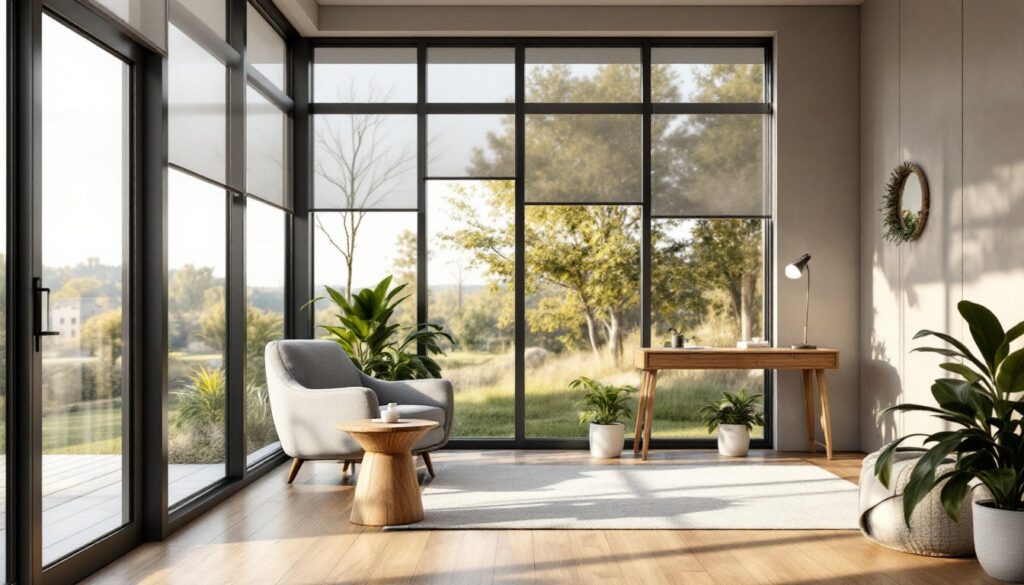
Key characteristics include low-profile or naturally finished wood furniture, mixed metals (unpolished brass, matte black, raw steel), abundant natural light filtered through simple linen or cotton textiles, and an honest appreciation for imperfection and age. Handmade pottery, woven baskets, plants in clay pots, and vintage finds sit comfortably alongside contemporary pieces. Recent Interior Design Trends 2026 show that boho-modern is one of the leading styles homeowners are adopting because it’s both Instagram-worthy and genuinely livable. The design isn’t about aspirational perfection: it’s about creating a home that functions beautifully while reflecting the person who lives in it.
Essential Elements for Your Boho-Modern Space
Furniture and Textiles That Work
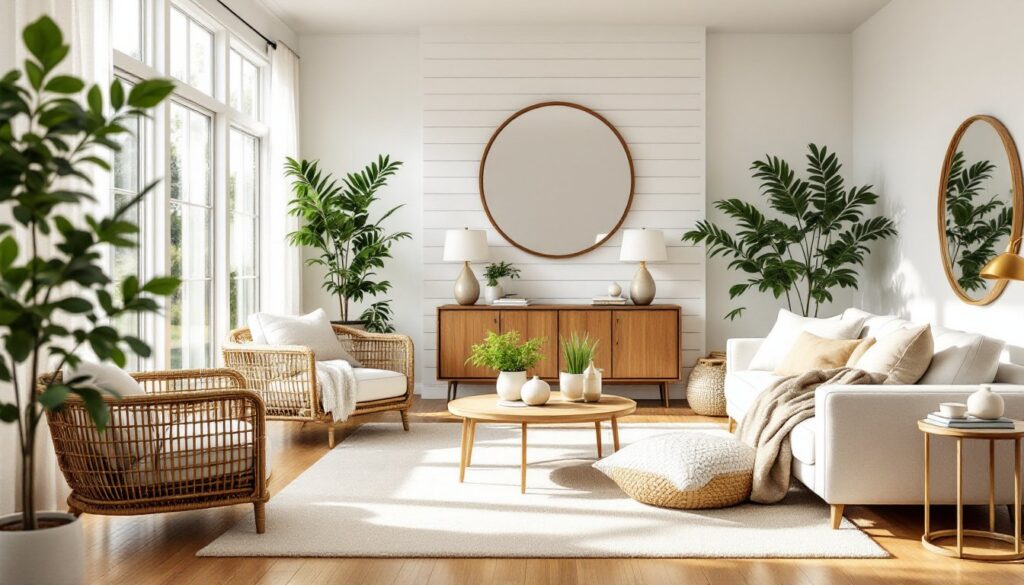
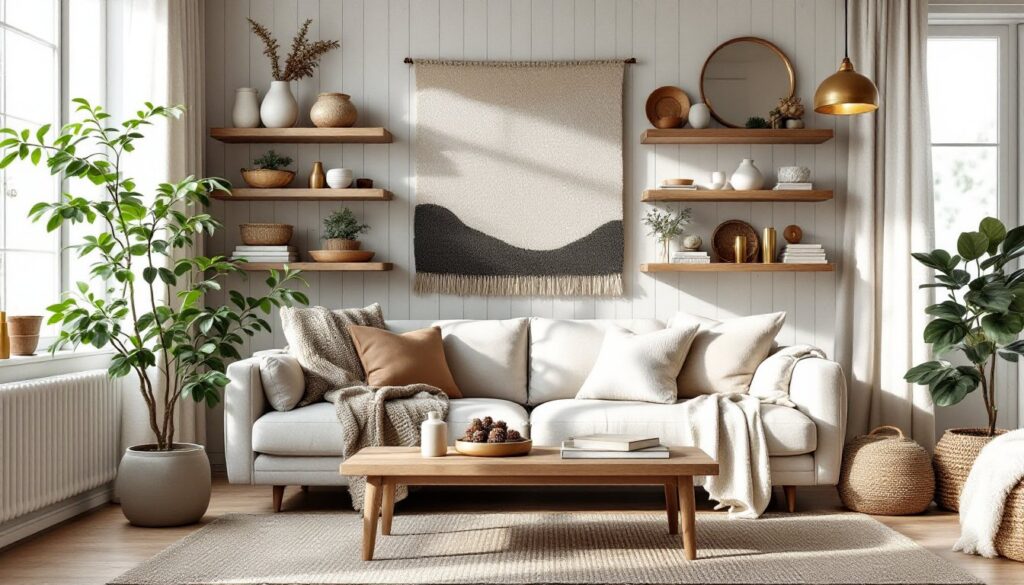
Furniture in a boho-modern home should prioritize natural materials and clean silhouettes. Low-slung seating with simple wood frames, linen upholstery, and minimal decoration works well. A sectional or sofa in neutral linen or cotton blends boho’s comfort emphasis with modern lines. Pair it with a simple wood-frame coffee table, look for walnut, oak, or reclaimed pieces rather than highly polished finishes.
Storage is a practical anchor. Wooden shelving units with clean geometry, rattan-fronted cabinets, or floating wood shelves display books, pottery, and plants without visual clutter. Interior Design Examples often feature storage that doubles as decoration, where baskets and woven pieces organize daily items while adding texture.
Textiles make or break a boho-modern room. Layer different weights and weaves: a chunky knit throw draped over a sofa, wool area rugs in neutral tones with subtle pattern, linen curtains in natural or soft white, and decorative pillows mixing solid linen with one or two pieces in a geometric print or global pattern. Quality matters here, natural fibers age beautifully and feel good in a space where people actually sit and rest. Avoid overstuffed, decorative-only pillows: choose ones that invite someone to lean back and relax.
Wood tones anchor the palette. Medium to warm wood (not bleached or gray-washed) pairs beautifully with soft textiles. Metal accents should be intentional: a brushed brass desk lamp, a black steel plant stand, or matte brass wall-mounted shelves add interest without competing with the overall calm. Homedit for ideas on balancing these elements in real rooms.
Creating Visual Balance With Patterns and Textures
Texture is where boho-modern actually breathes. Too much solid color reads sterile: too much pattern reads chaotic. The key is layering different tactile experiences so the eye stays engaged without feeling overwhelmed.
Start with textured neutrals: a chunky jute area rug, natural linen walls or wallpaper with subtle texture, wooden beams or a shiplap accent wall in soft white. Then introduce pattern intentionally. A single geometric throw pillow on a neutral sofa, a woven wall hanging, or a small collection of patterned tiles around a fireplace adds visual interest. Patterns should feel inspired by global or natural sources: geometric patterns found in Moroccan tilework, botanical motifs, hand-drawn stripes, or traditional weaving patterns. Keep pattern limited to 20–30% of the room: the rest stays calm.
Mix matte and glossy finishes. Unglazed pottery, matte paint, natural wood, and raw stone create a grounded feeling. Then introduce one or two pieces with subtle sheen: a glazed ceramic vase, a lacquered tray, or a brass-framed mirror. This contrast adds sophistication without breaking the natural aesthetic.
Layering is everything. Pile a throw blanket on a chair, nestle books on a shelf next to a small sculpture and a potted succulent, display woven baskets at different heights. This approach is distinctly boho-modern: curated but not sterile, abundant but not cluttered. Interior Design for Beginners emphasizes that balance is learned through practice, don’t overthink the first attempt.
Lighting and Accessories: The Finishing Touches
Lighting shapes mood more than most people realize. Boho-modern spaces thrive on warm, diffused light. Natural light is the gold standard: use simple linen curtains or Roman shades that filter sun without darkening a room. For artificial light, warm white bulbs (2700K color temperature) are essential. Harsh, cool lighting kills the vibe instantly.
Fixtures should be simple and natural-feeling. A wooden pendant light with a simple shade, a tripod floor lamp with an unbleached linen shade, or clusters of warm-toned Edison bulbs hung from a simple metal fixture all work. Avoid heavy ornamental chandeliers or modern chrome fixtures that feel cold. The goal is light that appears to come from honest sources, candles in glass holders, a simple hanging pendant, or a basic table lamp.
Accessories are the personality layer. Houseplants are non-negotiable, not one token plant, but several scattered throughout: a trailing pothos on a shelf, a fiddle leaf fig by a window, small succulents on a side table. Use clay pots, ceramic vessels, or woven baskets, never plastic.
Wall art should be intentional and sparse. A single large piece (a woven wall hanging, a framed textile, or a mixed-media artwork) has more impact than a gallery wall of small frames. If using multiple pieces, keep them cohesive in color and material, three black-framed prints, or three woven tapestries, rather than a random mix.
Small accessories round out the look: a ceramic bowl holding pinecones, a vintage brass candlestick, a stack of leather-bound books, a woven placemat, or a simple wooden tray organizing items on a coffee table. Each piece should have a function or hold genuine sentimental value, nothing purely decorative. Modern design inspiration from Decoist shows how even small accessories become focal points when thoughtfully placed.
Room-by-Room Application Guide
Living Rooms are the ideal canvas for boho-modern. Start with a neutral sofa in natural linen or cotton, add warm wood coffee and side tables, layer a jute or wool area rug, hang simple linen curtains, and display art and plants intentionally. Textiles, throws and pillows in earth tones with one or two accent patterns, invite people to settle in. A wooden bookshelf holding a mix of books, ceramics, and plants anchors the room. Warm lighting from simple fixtures makes the space feel alive.
Bedrooms benefit from boho-modern’s comfort-first ethos. Natural bedding, linen sheets, a cotton duvet, a chunky knit throw, makes the bed an inviting focal point. A simple wood platform or frame (low-profile, minimal headboard) grounds the room. Avoid clutter: a single wood nightstand, a simple pendant or wall sconce, and minimal décor keep the focus on rest. One woven wall hanging or textile art piece above the bed adds personality without overwhelming. Plants in corners and by windows soften the space.
Kitchens and Dining Areas can embrace boho-modern through natural materials and intentional display. Open wooden shelving (not everywhere, just one or two sections) showcases ceramics and glassware in warm tones. A simple wood dining table with woven or rattan chairs, a natural fiber runner under the table, and warm lighting overhead create a space people want to linger in. Avoid overly decorative kitchen gadgets: instead, display items that are both functional and beautiful, a wooden cutting board, a ceramic crock holding utensils, linen tea towels.
Bathrooms stay minimal and spa-like. A simple wooden vanity, warm white or cream walls, natural light from a small window or quality electric light, and storage in woven baskets keep things clean. A potted plant by the window or a hanging fern adds life. Towels in soft colors and natural fibers are both practical and tactile. Avoid overcrowding shelves: let negative space breathe. Explore more Interior Design Ideas for room-specific inspiration and solutions tailored to different spaces and budgets.