

Table of Contents
ToggleLiving in a high-rise apartment comes with distinct challenges: limited square footage, no control over exterior views, and shared walls that restrict renovations. But these constraints aren’t roadblocks, they’re design parameters that, when approached strategically, unlock genuinely smart solutions. High-rise apartment interior design requires thinking vertically, using light as an asset, and treating every square inch as real estate. This guide walks through the practical moves that separate cramped urban living from thoughtfully designed, livable spaces that feel bigger than their footprint.
Key Takeaways
- High-rise apartment interior design succeeds by treating space constraints as design parameters rather than obstacles, using vertical thinking and strategic light management to maximize livability.
- Natural light and mirrors are essential assets in compact apartments—position seating toward windows, use reflective surfaces to amplify daylight, and choose low-gloss wall finishes (eggshell or satin) that scatter light softly rather than harshly.
- Precise furniture sizing and floating layouts define zones without visual division: measure your space carefully before purchasing and use floating pieces and low credenzas as subtle boundaries to make rooms feel larger.
- Multi-functional storage solutions like bed drawers, nesting tables, vertical shelving, and ottoman poufs are non-negotiable in high-rise living—storage should double as decor through organized, color-coordinated display.
- Light neutral wall colors and natural material layering (warm wood, brushed metals, quality textiles) create warmth and visual spaciousness without overwhelming compact layouts.
- Window treatments installed close to the ceiling with rods extended 8–12 inches beyond the frame create the illusion of height and width while filtering light rather than blocking views and vertical sightlines.
Leveraging Light and Views in Vertical Living
Natural light is currency in high-rise apartments. Don’t squander it behind heavy drapes or dark furniture. Position seating to face windows rather than away from them, and keep window sills clear of clutter.
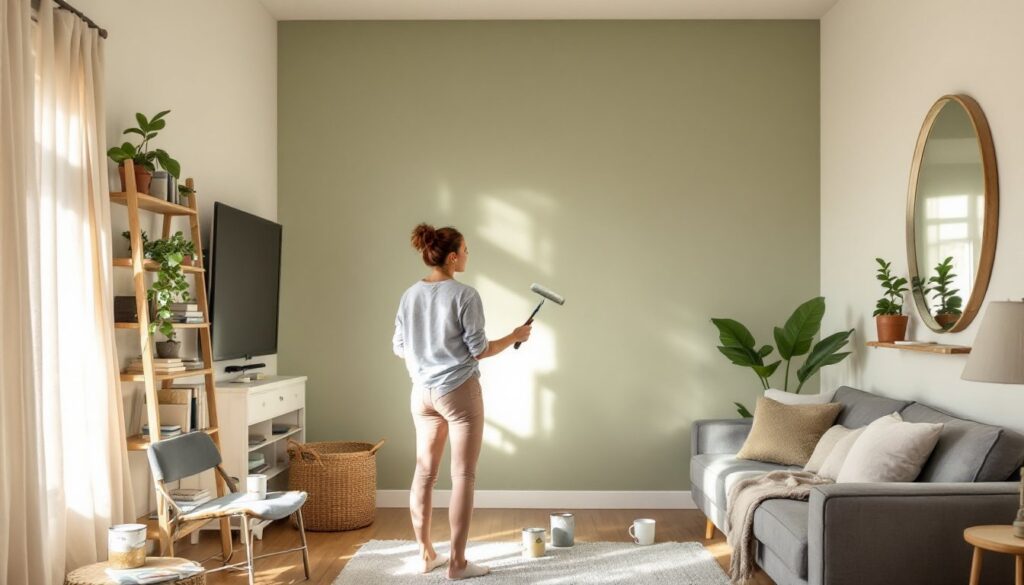
If your views aren’t magazine-worthy, lean into reflected light instead. Mirrors opposite or adjacent to windows amplify daylight without eating floor space. Matte finishes on walls near windows scatter light softly: glossy or semi-gloss surfaces can feel harsh in small rooms. Consider low-gloss paint for walls (eggshell or satin) and save gloss finishes for trim or accent pieces.
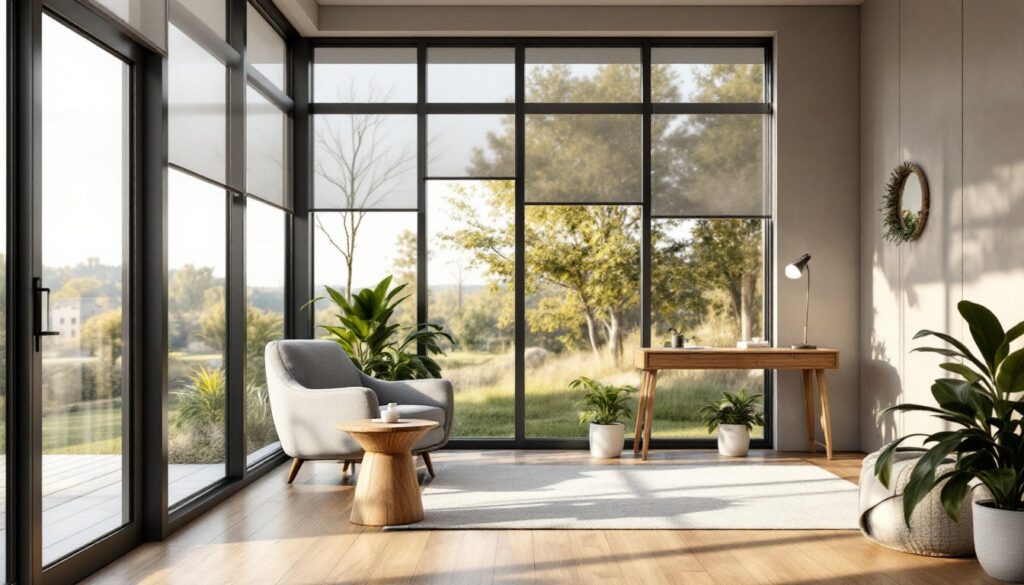
Window treatments matter more here than in ground-floor homes. Vertical blinds or motorized cellular shades let you adjust light throughout the day without blocking the view. Sheer panels diffuse harsh afternoon sun while keeping the space open to outside. Avoid floor-to-ceiling heavy curtains unless you genuinely need blackout capability, they compress vertical space visually. If blackout panels are necessary for sleep, install a thin linen layer behind them for daytime softness.
Smart Space Planning for Compact Layouts
Measure twice, buy once. In a high-rise, there’s no overflow storage, so furniture sizing is non-negotiable. Arm chair depth typically runs 32–36 inches: match this to your actual living area before purchasing. A 7-foot sofa might dominate a small living room where a 5-foot sectional breathes better.
Layout matters more than style. Create distinct zones, work corner, seating area, sleeping space, without physically dividing the room. A low credenza or console table behind a sofa acts as a visual boundary without blocking sight lines. Floating furniture (pulling it away from walls) actually makes rooms feel larger because it defines zones and lets background architecture show.
Industrial or commercial-grade modular pieces work well here. Stacking chairs, nesting tables, and rolling storage containers add flexibility as your life changes. Wall-mounted shelving and fold-down desks preserve floor freedom. Think of your apartment as a ship’s cabin: every item needs to earn its berth.
Multi-Functional Furniture and Storage Solutions
A bed frame with drawers underneath isn’t a nice-to-have: it’s essential. Bench seats with hinged tops store linens or seasonal items. Nesting coffee tables expand when guests arrive and compress when they leave. Ottoman pouffes double as seating, footrests, and hidden storage.
Vertical storage is your best friend. Floor-to-ceiling shelving (or nearly so) uses wall space that would otherwise sit empty. Open shelving in living areas feels less heavy than closed cabinets: in bedrooms or home offices, closed storage keeps visual clutter at bay. Install shelves at varying heights to break up monotony and accommodate different object sizes.
The secret to high-rise living is treating storage as decor. Magazine holders, woven baskets, and labeled boxes on shelves don’t hide mess, they organize it visibly and affordably. This works best when your items are grouped by color or material: white ceramics together, wood pieces together, books spine-out.
Color and Material Choices for Small Spaces
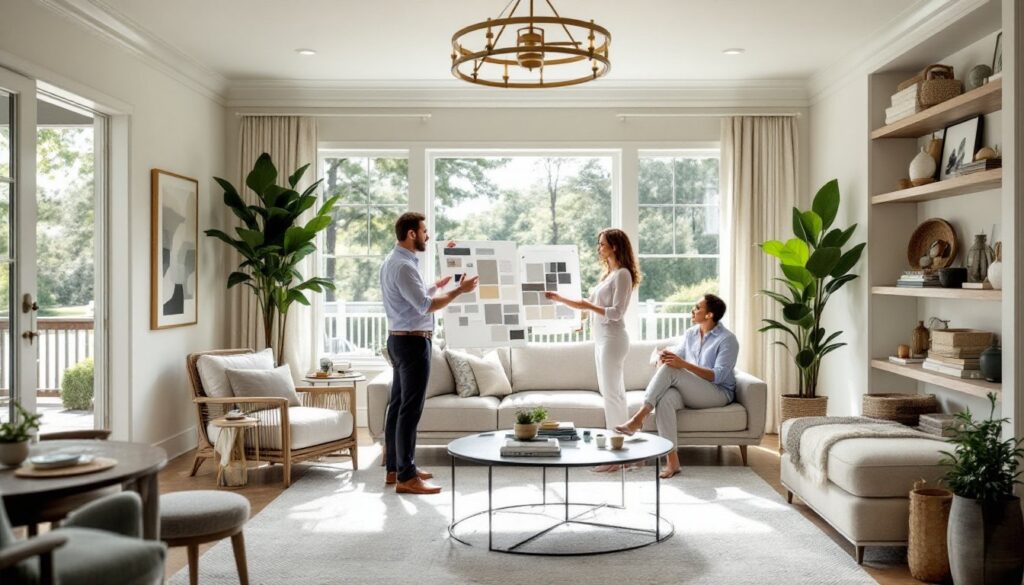
Light, neutral wall colors (white, warm gray, soft beige) are foundational in small apartments. They expand space psychologically and provide a clean backdrop for accent pieces you can change later. This isn’t about bland: it’s about smart. A feature wall in deep charcoal or rich navy works in high-rises when it’s the wall behind your bed or behind a main seating area, bounded, intentional, not sprawling.
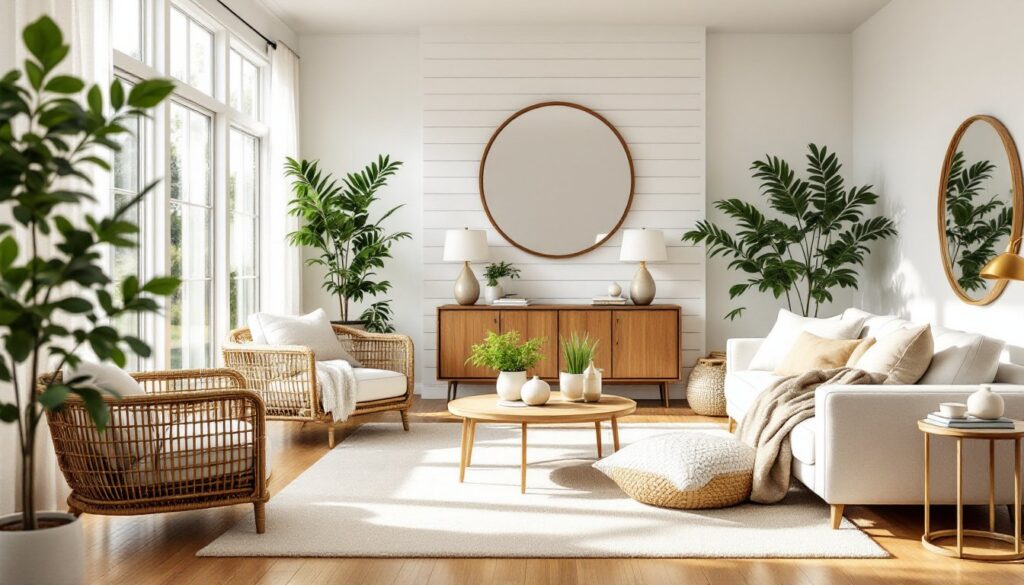
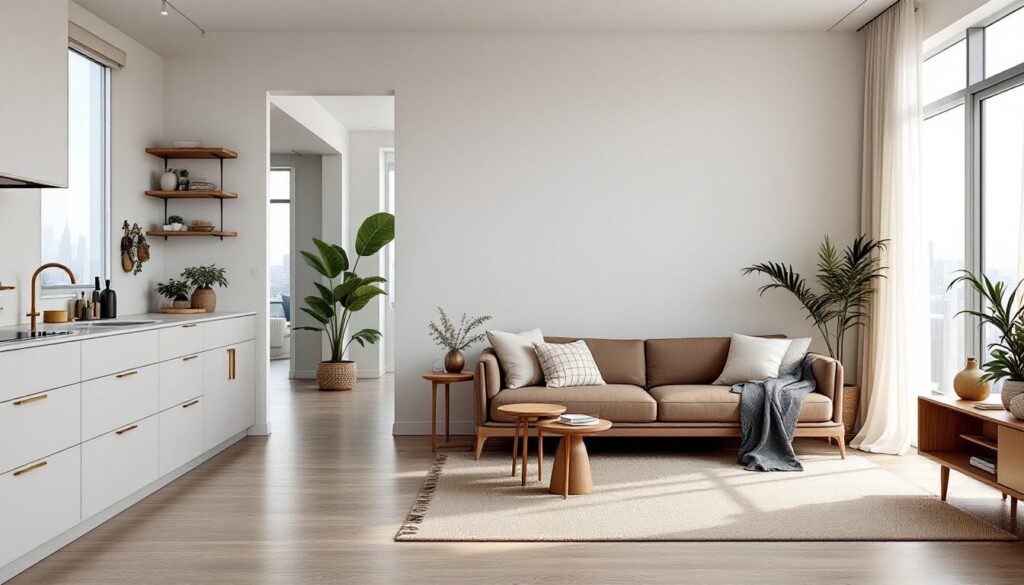
Top Interior Design Trends often emphasize material layering to add warmth without color. Mix natural wood tones (medium walnut, oak) with matte metals (brushed brass, blackened steel) and soft textiles (linen, wool, cotton blends). Avoid high-gloss finishes on large pieces: they bounce light chaotically in small rooms. A matte-finish white kitchen with brushed-brass hardware and warm wood open shelving feels intentional and spacious.
Textile choices anchor comfort. In compact layouts, a quality area rug (wool or wool blend, not synthetic) defines the living zone and softens hard floors. Layer throw pillows in complementary neutrals with one patterned accent: this adds personality without visual noise. Curtains, if you use them, should be a neutral tone that matches or complements walls, they become part of the architecture, not a competing element.
Material finishes also matter tactilely. Rough linen, woven jute, and natural leather age beautifully in small spaces and don’t scream “new.” They feel settled faster than shiny plastic or ultra-sleek laminate. Interior Design: Transforming Spaces emphasizes how material choice affects emotional response, a small room with warm, natural textures feels cozier than a sterile one with plastic and chrome.
Window Treatments That Enhance Vertical Spaces
Window treatments in high-rises serve double duty: they control light and define the vertical dimension. Vertical blinds or floor-to-ceiling sheer panels draw the eye upward without adding bulk. Install rods or tracks as close to the ceiling as possible: even an inch matters visually.
Roman shades offer a cleaner look than horizontal blinds in smaller spaces. Choose light-filtering fabrics in white, cream, or soft taupe rather than blackout material. Light-filtering keeps the view and daylight while reducing glare and UV fade on furniture. If you absolutely need darkness (bedroom or home theater nook), install a blackout shade and a sheer panel separately, you get flexibility without permanent heaviness.
Hung correctly, window treatments can feel like an architectural feature rather than an afterthought. Extend the rod or track beyond the window frame by 8–12 inches: this visually widens the space even though the window itself hasn’t changed. In high-rises with multiple windows, treat them consistently, mismatched styles fragment already-tight sightlines.
Advoid puddling fabric on floors and overstuffed valances. Those look good in formal parlors with 12-foot ceilings, not in apartments where every detail competes for attention. Clean lines, simple hardware, and natural fabrics let the view, your best design asset, take center stage.
Creating Visual Continuity Across Open Layouts
Many high-rises use open-plan living: kitchen, dining, and living areas flow together. Without walls, the eye travels the whole length, so visual confusion reads as chaos. Create continuity through flooring and color.
Consistent flooring is paramount. If you have wood or laminate throughout, it acts as a unifying base layer. Area rugs define zones, one under the living room seating, one under the dining table, but the flooring beneath should be the same material or compatible finish. Switching from hardwood to tile to carpet segment spaces unnecessarily.
Interior Design Tips to recommends repeating accent colors and materials across zones. If your kitchen has stainless steel hardware, bring brushed steel into a floor lamp in the living area or a picture frame on a bedroom shelf. This repetition feels intentional and cohesive rather than random.
Line of sight matters too. When sitting on your sofa, what’s behind the dining chairs? What’s visible from the kitchen counter? In small apartments, sightlines run deep. Avoid visual dead-ends (a wall covered in clashing artwork) or busy focal points (a wall of mismatched floating shelves). Instead, choose one strong focal point per zone: a media console in the living room, a gallery wall in a bedroom, a bookshelf in the office nook.
Interior Design Ideas often leverage large mirrors or reflective surfaces to extend visual space and create rhythm. A mirror opposite the main window multiplies light and creates a false depth. Similarly, a large artwork or a floating shelf with a few carefully curated objects (books, pottery, plants) becomes a gathering point for the eye rather than an anxiety-inducing void. Consistency in heights, materials, and color palette across these focal points ties the whole home together even though its compact footprint.
Conclusion
High-rise apartment design isn’t about luxury or trend-chasing: it’s about ruthless practicality married to aesthetic intention. Every piece of furniture, every color choice, every window treatment earns its place by either expanding space visually, improving natural light, providing genuine storage, or creating comfortable sightlines. Best Interior Design Ideas start with understanding your constraints, vertical footprint, shared walls, fixed views, and treating them as parameters for creative solutions. Measure meticulously, choose materials that age well, layer light and texture, and resist the urge to fill silence. A well-designed high-rise apartment doesn’t feel cramped: it feels intentional.