
Table of Contents
ToggleWhether you’re setting up a home office, refreshing a corporate office interior design, or carving out a dedicated workspace, the right interior office design transforms how you work. A well-designed office isn’t just about aesthetics, it’s about creating an environment where focus comes naturally and creativity flows. From lighting and ergonomics to color choices and layout, every decision affects productivity and mood. This guide covers the essential elements of functional office design, tackles small-space challenges, and walks you through building a plan that works for your specific needs.
Key Takeaways
- Interior office design directly impacts productivity, focus, and mental performance by removing environmental friction and supporting deep work.
- Proper lighting, ergonomics, and color psychology form the foundation of functional office design—start with task lighting, correct chair height with feet flat, and calm blues or greens for primary surfaces.
- Optimize small office spaces through vertical storage, appropriately scaled furniture (36–60 inch desks), and strategic mirror placement to create depth and maximize functionality.
- Implement your office design plan incrementally across five steps: assess your space, define work style, choose furniture and finishes, plan layered lighting, and build in phases.
- Small but impactful touches like plants, artwork, and proper sound absorption transform a purely functional workspace into an environment that motivates and sustains focus.
Why Your Office Design Matters
Your workspace doesn’t just hold furniture and equipment, it shapes how your brain performs. Research consistently shows that environmental factors directly impact focus, energy levels, and decision-making quality. A poorly lit, cluttered, or uncomfortable office drains mental resources before you’ve even started work. Conversely, a thoughtfully designed office space removes friction and supports deep work.
Many homeowners and DIY enthusiasts assume office design is purely decorative. It’s not. Your office design interior should balance three core functions: supporting the work itself, maintaining physical comfort, and creating psychological conditions for focus. Whether you’re designing a small corner nook or an entire commercial office space, these principles remain consistent.
Beyond personal productivity, a well-designed office reflects professionalism. If you host clients, conduct video calls, or simply want a space that motivates you, intentional design matters. The good news: you don’t need a massive budget or a designer on staff to get this right. Strategic choices about layout, materials, and lighting deliver measurable results.
Essential Elements of Functional Office Design
Lighting and Ergonomics
Lighting is the foundation of office design interior. Poor lighting causes eye strain, headaches, and fatigue, productivity killers that accumulate over hours. Natural light is ideal, but most offices need layered artificial lighting to function.
Start with ambient light (general brightness from overhead fixtures or panel lights). Add task lighting where you focus most, a desk lamp or under-shelf LED strip reduces strain when reading, writing, or detailed work. Avoid positioning your screen directly opposite a bright window or light source: glare causes constant micro-adjustments that exhaust your eyes. If natural light is limited, invest in full-spectrum LED bulbs (4000–5000K color temperature mimics daylight) rather than warm incandescent. They cost more upfront but reduce fatigue significantly.
Ergonomics keeps your body from sabotaging your mind. Your chair height should allow feet flat on the floor with knees at 90 degrees. Your desk should position your elbows at 90 degrees with shoulders relaxed, a desk that’s too low forces hunching: too high strains shoulders. Your monitor should sit at eye level about an arm’s length away. These aren’t luxuries: they’re injury prevention. Even minor postural stress compounds over weeks into neck, shoulder, and lower back pain that bleeds into every other part of your day.
If you’re on a budget, start with what you have and adjust incrementally. A monitor riser costs $20–$50 and solves screen height. A footrest ($15–$30) helps if your feet dangle. An adjustable chair matters more than anything, aim for lumbar support and adjustable height. Industrial office interior design often emphasizes these mechanics because they’re non-negotiable.
Color Psychology and Mood
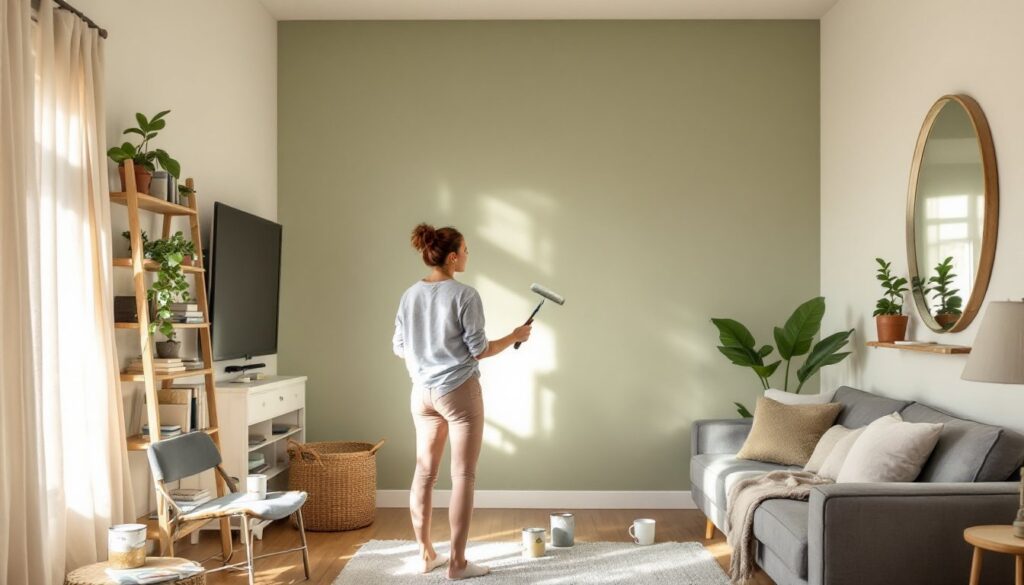
Color shapes mood and focus more than most people realize. Blues and greens promote calm and concentration: they’re safe choices for primary wall colors or large furniture pieces. If your office feels sterile, add accent colors through smaller elements, a throw pillow, artwork, or plant that bring warmth without overwhelming.
Neutral base tones (soft grays, beiges, warm whites) work best for corporate office interior design ideas because they provide visual rest and let your actual work take focus. Reserve bold colors for accent walls or accessories. A feature wall in deep blue or muted forest green can anchor the space and add visual interest without fatiguing your eyes during long work sessions.
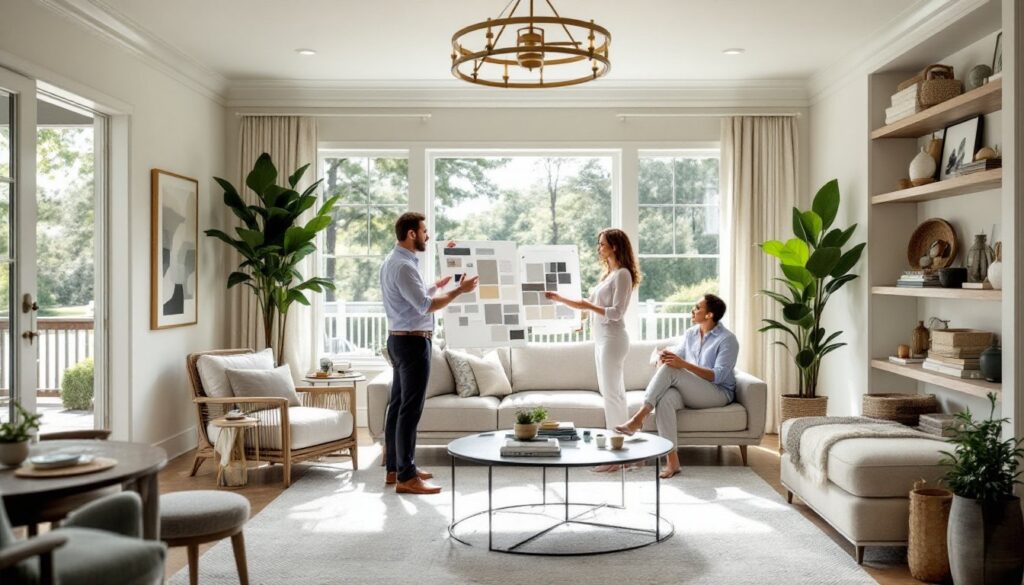
Avoid high-saturation reds or oranges as dominant colors, they’re stimulating and can increase stress over time. If you love warm tones, opt for terracotta, rust, or muted ochre instead. Lighting also affects color perception: warm-white bulbs shift colors toward yellow, while cool-white bulbs shift them toward blue. Test your paint or fabric samples under the actual lighting you’ll use before committing.
Designing for Small Office Spaces
Small office spaces require strategy, not sacrifice. The goal is to maximize function without creating visual chaos. Start with a clear layout: position your desk to face the door or a window (this is often called the “power position” and psychologically supports focus). Ensure there’s a natural traffic path that doesn’t force people to squeeze around your chair.
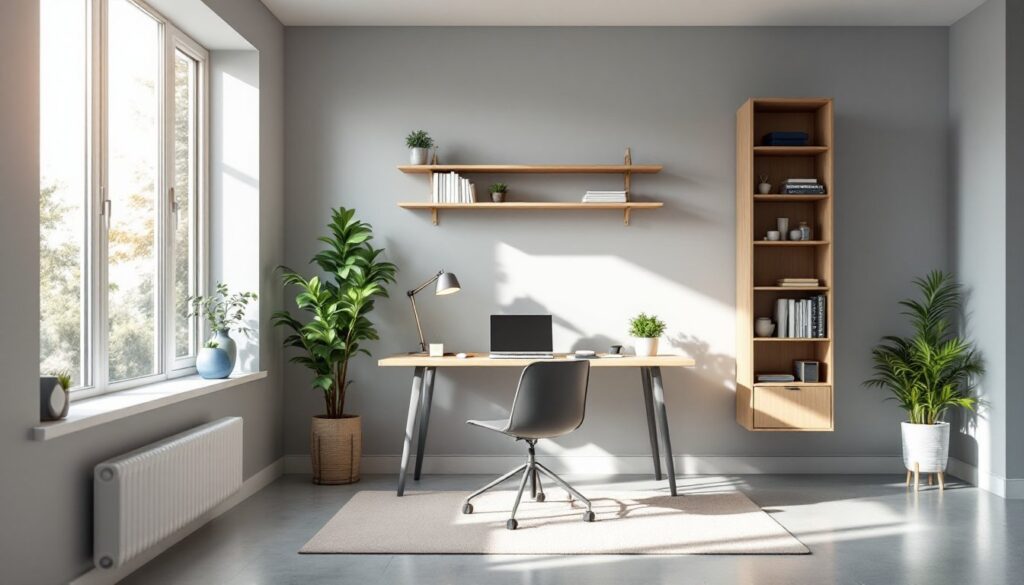
Vertical storage is your best friend in small spaces. Wall-mounted shelves, cabinets, and pegboards keep surfaces clear and make the room feel larger. Open shelving looks airier than closed cabinets, but closed storage hides clutter better, choose based on how you naturally work. A single tall storage unit in a corner uses dead space efficiently.
Furniture scale matters. An oversized desk or credenza visually swallows a small room and leaves no breathing room. Opt for a desk in proportion to your space, 48 to 60 inches is standard, but a 36-inch desk with a floating shelf for overflow can work in tight corners. A narrow console desk (30–36 inches deep) frees up walking space while still providing work surface.
Mirrors are a practical trick: positioned opposite a light source or window, they reflect light and create a sense of depth. They’re especially useful in office design interior where natural light is scarce. Keep only what you actually use within arm’s reach. Everything else should have a designated home, closed drawers, shelf boxes, or a small filing cabinet. Interior design for office space thrives on clarity. Clutter creates cognitive load and kills focus. When every item has a place and only necessary items are visible, the space feels peaceful and functional.
Bringing It All Together: Your Office Design Plan
Now that you understand the core elements, here’s how to build your actual office design plan:
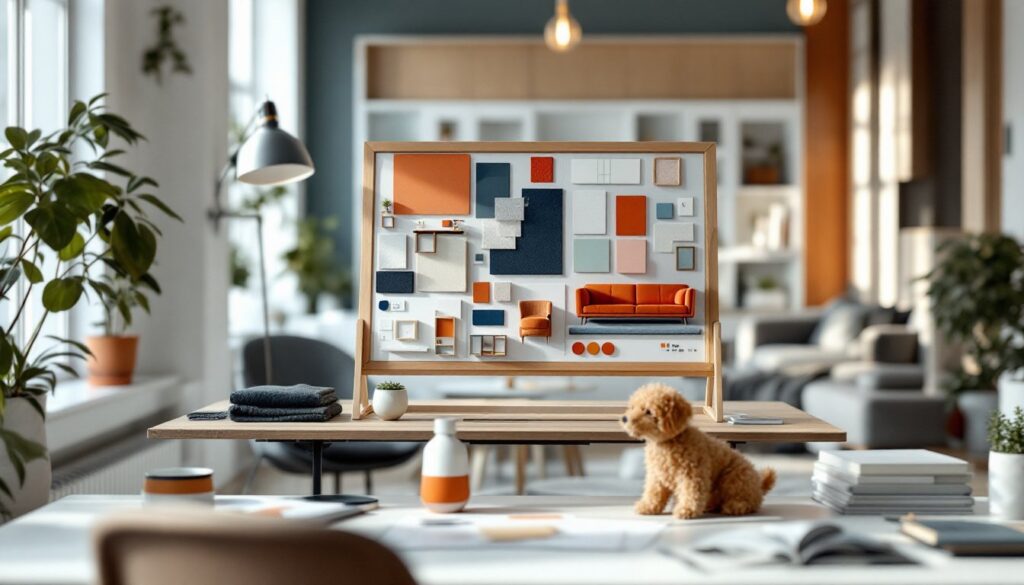
Step 1: Assess your space. Measure your room or area, note windows and natural light, and identify obstacles (outlets, structural elements, doors). Sketch a basic layout.
Step 2: Define your work style. Do you need multiple monitors, reference materials spread out, or mostly just a laptop? Are calls and video important? This shapes desk size and layout. Someone handling calls needs visual privacy and sound isolation: remote design work benefits from dual monitors and large desk space.
Step 3: Choose furniture and finishes. Select a desk, chair, and storage that match your space and budget. Neutral base tones keep options open and age well. Flooring choices matter too, hard surfaces reflect sound (consider a small rug under the desk), while soft materials absorb it. Industrial office interior design often pairs concrete or polished concrete with wood or metal elements, balancing durability with warmth.
Step 4: Plan lighting. Audit natural light at different times. Install task lighting at your desk. Add ambient light if overhead fixtures are inadequate. Test color temperatures before buying bulbs in bulk.
Step 5: Carry out in phases. You don’t need everything perfect on day one. Corporate office interior design ideas take time to refine. Start with core infrastructure, desk, chair, and lighting, then layer in accessories, plants, and artwork as budget allows.
Resources like interior office design archives and interior design for beginners guides offer structured approaches. Inspiration sites like Homedit and Decoist showcase real office setups across styles. Interior design trends 2026 highlight what’s working now, helping you align personal style with current best practices.
Don’t underestimate small touches, a plant or two improves air quality and adds life to a sterile space. Artwork personalizes without needing much budget. These details take your workspace from purely functional to genuinely enjoyable.
Conclusion
Interior office design is a practical investment in how you work and feel every day. By prioritizing lighting, ergonomics, and color thoughtfully, and by scaling your approach to your actual space, you create an office that supports focus and effort. Whether you’re working with 100 square feet or an entire floor, the fundamentals remain: comfort, clarity, and intent. Start with one change, measure how it feels, and build from there. Your best work deserves a workspace that’s ready for it.