

Table of Contents
ToggleSpace planning is the foundation of good interior design, yet it’s the step most people skip. You can have the perfect color palette and beautiful furniture, but if your layout doesn’t work, the room will feel off. Whether you’re dealing with a cramped apartment, an awkwardly shaped living room, or just want your home to function better, thoughtful space planning transforms how you actually live in your home. This guide walks you through seven practical strategies that help you maximize every square foot, improve traffic flow, and create rooms that feel both spacious and purposeful. Let’s turn those unused corners and cramped areas into highly functional spaces.
Key Takeaways
- Interior design space planning is the strategic foundation that determines how functional your room actually is, transforming how your family lives in the space—making it a priority before decorating.
- Accurate measurements of room dimensions, doorways, windows, and fixed elements like outlets and radiators are non-negotiable; use a floor plan with scaled furniture cutouts to test arrangements before purchasing.
- Define clear activity zones with dedicated traffic flow paths (at least 2–3 feet wide) to help people move naturally through the room without navigating around obstacles.
- Choose furniture that matches your room’s scale; oversized pieces in small rooms block walkways and make spaces feel cramped, while tiny furniture in large rooms looks lost and unbalanced.
- Vertical storage solutions like wall-mounted cabinets and tall bookcases maximize functionality while keeping floor space open, making small rooms feel visibly larger.
- Layer your lighting with ambient, task, and accent sources, and use light neutral colors on walls paired with mirrors to bounce natural light and visually expand the space.
Why Space Planning Matters for Your Home
Space planning isn’t decorating. It’s the strategic arrangement of furniture, zones, and pathways to make a room work harder for you. A well-planned room flows naturally, people move through it without bumping into furniture, activities happen in dedicated spots, and the space feels larger than it actually is.
Bad space planning creates frustration. Maybe your living room sofa blocks the walkway to the kitchen, or your desk is positioned where you can’t use natural light. These weren’t design failures, they were planning failures. Good space planning solves real problems: it reduces clutter perception, improves daily movement through your home, and makes small rooms feel bigger. It also saves money because you buy furniture that actually fits your layout instead of squeeze-it-in-and-hope pieces. Interior design vs interior decorating are different disciplines, while decorating focuses on aesthetics, space planning is about function first, beauty second.
Assess Your Space: Taking Accurate Measurements and Understanding Layout
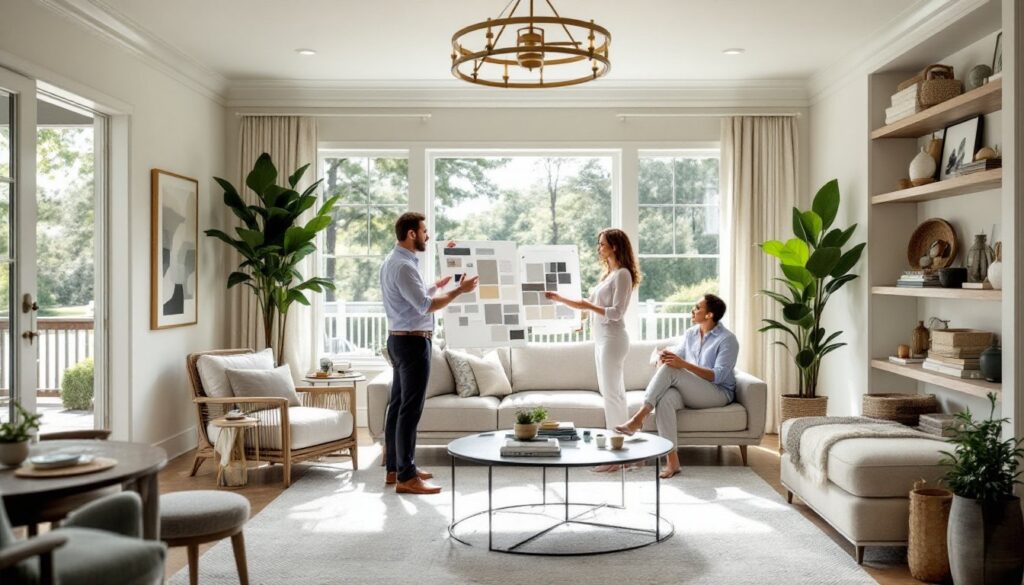
Before you move a single piece of furniture, measure everything. Grab a tape measure, pencil, and paper (or use a smartphone app like MagicPlan or RoomScan). Measure room length and width, note window and door locations, measure closets, and identify fixed elements like radiators or electrical outlets.
Write down the height of doorways and note any sloped ceilings, alcoves, or structural columns. Take photos of your actual space, natural light direction, outlet placement, and how sunlight moves throughout the day. This data matters because it tells you where heavy furniture can go (near structural walls), where you need clearance (walkways), and where light-dependent activities should happen. Don’t eyeball it.
How to Measure Your Room Effectively
-
Measure from corner to corner in both directions for room dimensions. Round to the nearest inch.
-
Measure doorways and windows from both the frame edge and the wall. Note swing direction for doors.
-
Mark fixed features on paper: outlets, light switches, radiators, built-ins. These don’t move, so work around them.
-
Note ceiling height. Standard ceilings are 8–9 feet: sloped ceilings or vaulted areas change furniture scale options.
-
Create a to-scale floor plan. Use 1/4 inch = 1 foot scale (standard for home layouts). Graph paper works, or use Floorplanner.com for digital versions.
-
Cut furniture templates to scale and test arrangements before you buy anything. This prevents costly mistakes.
Define Your Zones and Traffic Flow
A well-planned room has clear zones, areas where specific activities happen. In a living room, that’s a conversation zone around seating, a media-viewing zone facing the TV, and a reading nook by the window. Each zone should be visually and functionally distinct, even in an open floor plan.
Traffic flow is the invisible pathway people use to move through your room without navigating around furniture. Identify the main entrances and exits, then trace the natural path from door to destination. This path shouldn’t require squeezing past a sofa or tiptoeing around a coffee table. Leave at least 2-3 feet for walkways. In living rooms, create a conversational furniture grouping where people face each other at roughly arm’s length (about 8 feet apart). Interior Design for Beginners emphasizes that function and flow are the starting point, beauty follows.
Choose the Right Furniture Scale and Placement
A common mistake: furniture that’s too large or too small for the space. A massive sectional might be beautiful, but if it fills 60% of your room and blocks walkways, it doesn’t work. Measure the actual piece before buying (length, depth, seat height), then test placement on your floor plan.
Scale rule of thumb: In a small room (under 150 sq ft), choose one statement piece and scale everything else down. In a large room, you need larger furniture: tiny pieces will look lost. Leave at least 12–18 inches from the sofa to a coffee table so people can actually sit down. Floating furniture (not pushed against walls) creates defined zones and makes rooms feel larger because you see the full perimeter. If you’re starting fresh, interior design ideas from professional designers show how strategic placement and appropriately scaled pieces transform awkward layouts into functional, beautiful spaces.
Maximize Storage and Minimize Clutter
Clutter makes small spaces feel smaller. Built-in shelving, wall-mounted cabinets, and furniture with hidden storage (ottomans with compartments, coffee tables with drawers) are your friends. Vertical storage is crucial, use wall space, tall bookcases, and upper cabinets so floor space stays open.
Create a “one in, one out” rule: before you buy new décor, remove something. Use baskets or bins to corral small items and keep them off surfaces. In bedrooms, opt for under-bed storage containers. In living rooms, a credenza with closed storage hides remotes, books, and household items while providing a visual break. Interior Design Tips highlight that good storage design is invisible, it keeps your life organized without advertising clutter. Measure your available wall and floor space, then choose storage pieces that fit the footprint without overwhelming the room.
Lighting and Color: Creating Visual Space
Light and color manipulate how spacious a room feels. A dark, shadowy room with one overhead fixture feels smaller and cave-like. Add multiple light sources, a floor lamp near seating, task lighting at a desk, wall sconces flanking a mirror, and the room opens up. Layer your lighting: ambient (general light), task (for specific activities), and accent (highlighting features).
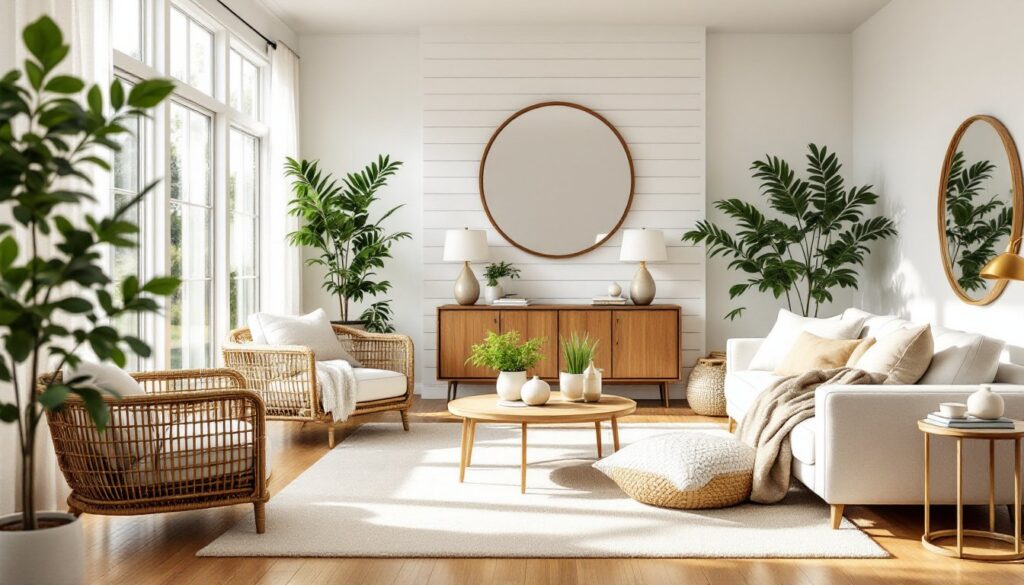
Color also affects spatial perception. Light, neutral walls (soft whites, warm grays) expand a room visually. Deep colors can work as an accent wall, but painting all four walls dark makes the space feel compressed. Use color strategically, paint the back wall of a long, narrow room a slightly deeper shade to visually shorten it and make it feel more balanced. Interior Design Trends for 2026 emphasize warm, human-centered palettes paired with good lighting as a way to make homes feel both cozy and open. Resources like Apartment Therapy’s space planning collection offer extensive inspiration for how light and color work together in real homes. If natural light is limited, consider sheer curtains to maximize daylight, and use mirrors opposite windows to bounce light around the room.
Putting It All Together
Good space planning is low-tech and high-impact. Start with accurate measurements, identify how you actually use the room, then arrange furniture to support those activities with clear traffic flow. Scale matters, storage matters, and lighting transforms everything. You don’t need a designer or a big budget, just intentional decisions based on how your family lives. Measure twice, arrange once, and enjoy a home that actually works for you.