

Table of Contents
ToggleSpanish modern interior design strikes a balance between the warmth and character of traditional Spanish homes and the clean lines of contemporary aesthetics. This style has gained momentum among homeowners who want their spaces to feel both timeless and current. If you’re drawn to rich textures, earthy tones, and functional beauty without the heavy ornamentation, Spanish modern could be your answer. This guide walks you through the essential elements, materials, and practical steps to bring this style into your own home.
Key Takeaways
- Spanish modern interior design balances traditional Spanish warmth with clean contemporary lines, using honest materials like terracotta, exposed wood, and lime plaster.
- A restrained earth-tone color palette—ochres, warm whites, and soft grays—combined with layered textures creates depth without visual chaos in Spanish modern spaces.
- Prioritize functional furniture made from natural materials with clear lines, and keep accessories minimal: a few quality handcrafted pieces outweigh numerous mass-produced items.
- Warm, layered lighting through wrought iron fixtures, dimmers, and natural light sources is essential to achieving the inviting atmosphere Spanish modern design requires.
- Preserve and highlight existing architectural details like original hardwood and exposed beams, or use authentic interpretations with matte finishes and reclaimed materials to build character over time.
What Defines Spanish Modern Interior Design
Spanish modern interior design takes inspiration from the vernacular architecture and interior traditions of Spain, think whitewashed walls, terracotta tiles, and heavy wooden beams, and pairs them with minimalist sensibilities, neutral color schemes, and uncluttered layouts. Unlike maximalist traditional Spanish design, which embraces bold patterns and dark, ornate furnishings, Spanish modern strips away excess while preserving the soul of authenticity.
The style emerged as designers sought to honor Spain’s rich architectural heritage while embracing contemporary living. It’s practical for families and small-space dwellers because it avoids visual chaos: every element serves both aesthetic and functional purposes. You’ll notice an emphasis on natural materials, handcrafted details, and a connection between indoors and outdoors, patios, courtyards, and large windows are common anchors.
What makes Spanish modern distinct is its honesty. Exposed brick walls aren’t hidden behind drywall: wooden beams are left visible: materials age gracefully rather than being replaced. This is a style that celebrates imperfection and the patina of time, making it ideal for homeowners who value authenticity over polished perfection. Recent Interior Design Trends 2026 confirm that this blend of heritage and contemporary design continues to resonate with those seeking depth and character in their interiors.
Key Elements and Materials
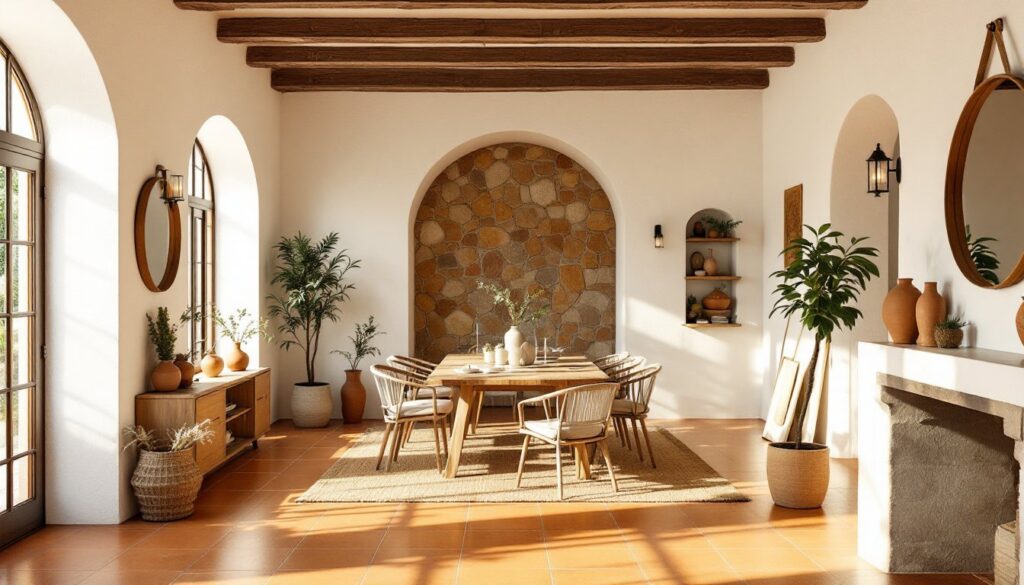
Spanish modern relies on a foundation of specific materials and architectural features. Terracotta tiles and clay floor finishes are common in authentic installations, though polished concrete or light-colored stone work equally well in contemporary versions. Exposed wooden beams, often left in their natural state or whitewashed, anchor ceilings and add visual interest without heaviness.
Walls in Spanish modern homes typically feature lime plaster or textured finishes in whites, creams, or soft warm tones. These materials have genuine appeal: lime plaster breathes naturally, regulates humidity, and develops a subtle patina over time. If you’re not ready for full plaster, high-quality matte or chalky-finish paints approximate the look effectively.
Hardware and fixtures lean toward wrought iron or blackened steel, door handles, light fixtures, and curtain rods all embrace this raw, handcrafted aesthetic. Wood selections typically include reclaimed timber, oak, or walnut in their natural grain without heavy staining. The goal is to let materials speak for themselves rather than over-processing them.
Color Palettes and Textures
The Spanish modern color palette centers on earth tones: ochres, warm whites, soft grays, terracottas, and deep burnt siennas. Accent colors are restrained, perhaps one wall in a deeper shade or subtle patterned tile in a kitchen or bath. The strategy here is layering textures rather than competing colors.
Texture is where Spanish modern design truly shines. A rough-hewn stone accent wall, paired with smooth lime plaster elsewhere, creates visual depth without color variation. Woven textiles, linen, jute, wool, appear in rugs, throws, and upholstery. Handmade ceramics and pottery add tactile interest. These textural choices evoke handcraftsmanship and make spaces feel lived-in from day one.
Consider how light interacts with your finishes. Matte surfaces absorb and diffuse light differently than glossy ones, influencing how colors read throughout the day. Interior Design Tips emphasize that surface finish choices matter as much as color selection when establishing a cohesive aesthetic.
Creating a Spanish Modern Living Space
Building a Spanish modern room starts with a clear-eyed assessment of your existing structure and budget. If you have good bones, original hardwood, intact plaster, or architectural details, preserve and highlight them. If not, don’t force authenticity with artificial aging: modern interpretations work equally well.
Begin with flooring. Original terracotta or clay tiles are ideal, but solid hardwood stained in warm medium tones, large-format light stone, or polished concrete all fit the aesthetic. The key is avoiding busy patterns or overly shiny finishes that read corporate rather than intentional. If you’re installing new flooring, account for material acclimation time (especially wood) and ensure subfloor prep is thorough, poor prep work is where many DIY projects fail.
Walls come next. If you’re starting fresh, choose matte or satin-finish paint in warm whites, soft grays, or earthy tones. Apply primer first, it improves adhesion and final color accuracy. One or two accent walls in a deeper tone (think burnt sienna or charcoal) work beautifully but avoid the temptation to over-design: restraint is part of the style’s appeal. Textured plaster finishes require more skill: if attempting this yourself, practice on a small closet or less-visible wall first.
Furniture Selection and Layout
Furniture in Spanish modern spaces should be functional, understated, and made from natural materials. A wooden dining table with clean lines, upholstered in natural linen or leather, anchors the space. Seating pieces lean toward straightforward silhouettes in neutral fabrics, avoid overstuffed, heavily ornamented furniture.
Layout matters tremendously. Spanish homes traditionally centered on courtyards or open living areas that encouraged gathering and airflow. Modern interpretations maintain this openness: avoid blocking sightlines with tall furniture: arrange seating to help conversation: keep pathways clear. In smaller spaces, multifunctional pieces, a wooden bench with storage, a table that extends, honor the practical spirit of the style.
Accessories are where many people stumble. The Spanish modern ethos is less is more: a few quality ceramic pieces, a woven basket, a stack of books, one good piece of wall art. Not every surface needs decoration. A room should feel intentional, not cluttered. Handcrafted items, a pottery bowl, a linen runner, a wooden box, carry more visual weight than mass-produced alternatives, so you can use fewer pieces and achieve greater impact.
Consult Interior Design Examples to see how real rooms balance openness with warmth. Notice how successful Spanish modern spaces often feature one or two strong focal points (a fireplace, a statement wall, a large window) rather than competing elements throughout.
Lighting and Accents for Authentic Spanish Flair
Lighting in Spanish modern design should feel warm and layered, never harsh or overly bright. Wrought iron fixtures, hanging lanterns, and clay or ceramic light sources (sconces with linen shades, pendant lights with hand-thrown bases) fit the aesthetic perfectly. Blackened steel or cast iron accents are also authentic choices.
Consider ambient, task, and accent lighting separately. Ambient lighting from ceiling fixtures provides overall illumination: wall sconces or table lamps offer task lighting for reading or cooking: accent lights highlight architectural features or artwork. Dimmers are essential, they allow flexibility and contribute to the warm, inviting atmosphere Spanish modern spaces require.
Natural light is equally important. Large windows, glass doors, and skylights connect interiors to outdoor space and maximize daylight. If privacy is a concern, linen curtains or wooden shutters provide screening without blocking light entirely. Shutters especially honor Spanish architectural tradition while serving contemporary function.
Accent pieces should feel collected rather than curated. A few pieces of handmade pottery, a wooden mirror with a simple frame, iron wall sconces, and perhaps one piece of textile wall art create personality without overwhelm. Local artisan markets often yield one-of-a-kind ceramics and woven goods at reasonable prices, these feel far more authentic than mass-produced “Spanish-style” decor.
Plants belong in Spanish modern spaces. Potted herbs on a kitchen windowsill, a large fiddle-leaf fig in a corner, or climbing vines near a patio door blur the line between interior and exterior. Choose planters in natural clay or simple ceramic, they’re inexpensive and completely period-appropriate.
Design publications like Homify showcase global interior design approaches, including Spanish and Mediterranean inspirations. Browsing project galleries there can help you see how successful designers balance simplicity with character. Also, Decoist regularly features contemporary interiors that incorporate Spanish and Mediterranean elements, offering real-world examples of how these styles translate in modern homes.
Conclusion
Spanish modern interior design succeeds because it respects both heritage and practicality. You don’t need a sprawling Spanish villa or a unlimited budget to bring this aesthetic into your home. Start with honest materials, a restrained color palette, and thoughtful lighting. Layer in texture and handcrafted pieces gradually. The style rewards patience and intentionality, it’s not something you rush or force, but rather build thoughtfully over time. Your home will feel grounded, warm, and genuinely yours.