

Table of Contents
ToggleCountry style interior design blends warmth, authenticity, and timeless appeal, and it’s having a moment in 2026. Homeowners are gravitating toward this aesthetic because it delivers both visual comfort and genuine livability. Unlike trends that fade in a season, country style roots itself in natural materials, earthy colors, and functional beauty that actually works for everyday life. Whether you’re drawn to farmhouse simplicity, cottage coziness, or rural elegance, country design offers a refreshing alternative to minimalism and industrial aesthetics that have dominated the past decade.
Key Takeaways
- Country style interior design prioritizes authentic natural materials, earthy colors, and functional beauty over fleeting trends, making it a durable aesthetic choice for 2026.
- Effective country style color schemes rely on warm neutrals and soft earth tones as a base, with muted accent colors like forest green and dusty blue layered through textiles and furniture.
- Invest in solid wood furniture and natural fiber upholstery that ages gracefully, and mix vintage pieces with new items to build authentic character rather than matching sets.
- Incorporate layered textures—exposed wood beams, stone, plaster, and natural rugs—to transform country interiors from plain to inviting and engage all the senses.
- Use warm lighting from table lamps and sconces with Edison bulbs or warm-white LEDs, and display meaningful vintage accessories intentionally to create a lived-in, authentic country home.
- Country design adapts to any budget and space type by focusing on high-impact changes like warm paint colors, lighting upgrades, and thrifted vintage pieces before committing to larger renovations.
Understanding Country Style Design Fundamentals
Country style isn’t one monolithic look, it’s a family of related aesthetics that share core principles. At its heart, country design celebrates honest materials and straightforward functionality. You’ll find hand-finished surfaces that show patina and wear rather than factory-perfect polish. Furniture is often heirloom quality or vintage pieces, chosen for durability and character rather than chasing current trends.
The philosophy behind country style emphasizes connection to land, craft, and seasonal living. A country home might feature exposed wood beams, hand-planed surfaces, or lived-in leather that tells a story. This doesn’t mean rustic equals cluttered, true country design is intentional. Every piece earns its place through utility or beauty, often both. The style works because it respects the building’s bones and adapts to local materials and climate. When you understand these fundamentals, you can apply country principles to any room without recreating a historical period piece.
Essential Color Palettes For Country Interiors
Country color schemes draw from nature: earth tones, soft neutrals, and muted jewel tones create the backbone. Think warm creams, soft whites (not stark white), warm grays, and taupe as your primary palette. These provide calm, livable backgrounds that won’t feel dated in three years.
Secondary colors add depth without visual noise. Deep forest green, dusty blue, warm terracotta, and muted burgundy work beautifully as accent colors on trim, cabinetry, or feature walls. The key is choosing colors with gray undertones rather than pure saturated hues, this keeps everything feeling cohesive and restful. Avoid bright primary colors or trendy pastels: they’ll fight the country aesthetic.
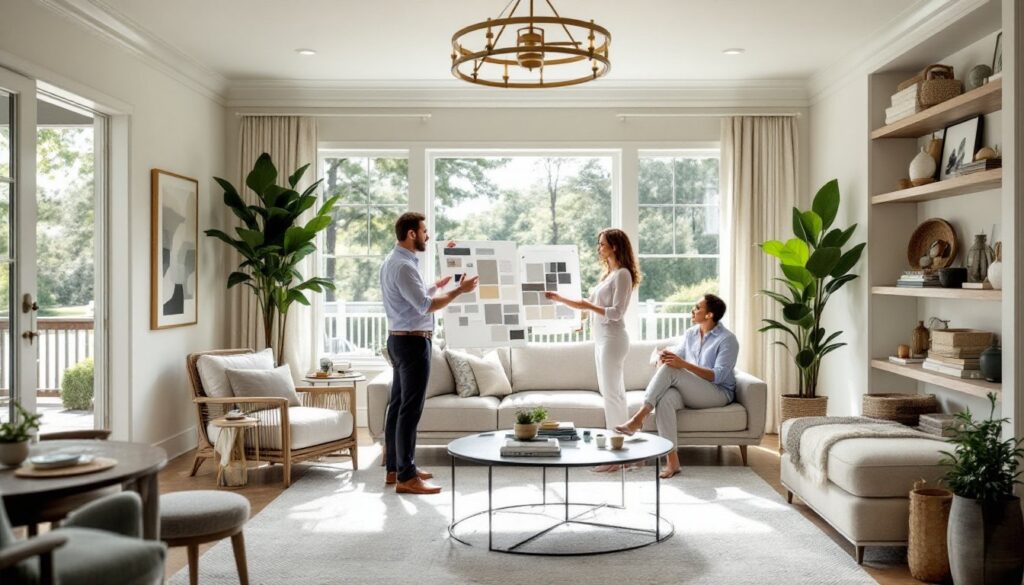
Natural materials provide color too. Raw wood tones, linen in cream and oatmeal, wool in warm grays, and stone in soft cream or gray create visual interest without needing paint. Patterns, when used, typically draw from checks, plaids, stripes, and simple florals, think vintage grain-sack prints rather than modern geometric designs. Start with a neutral base and layer in muted accent colors through textiles and furniture: this approach gives you flexibility to refresh the space seasonally without major expense.
Furniture Selection And Layout Strategies
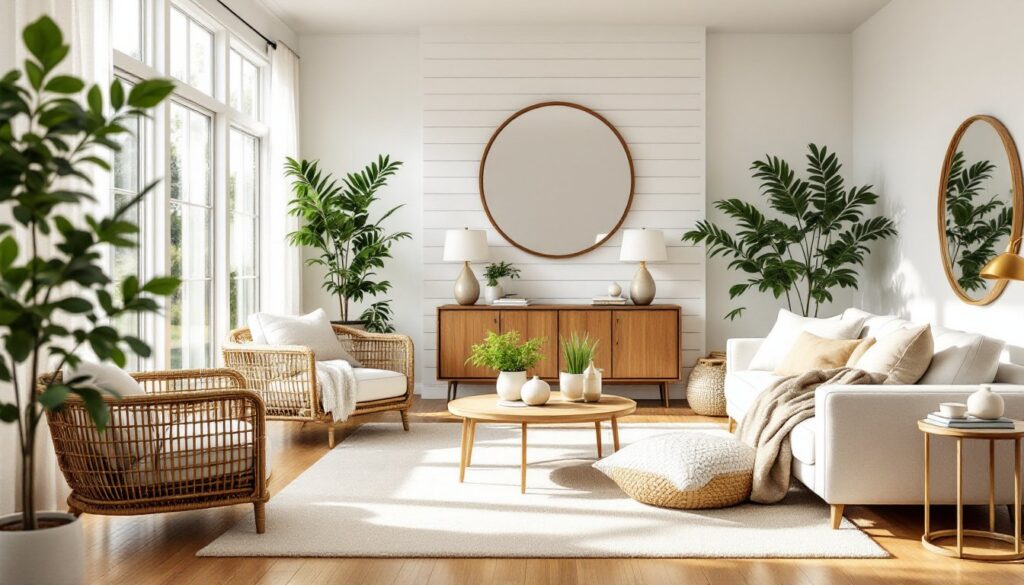
Country furniture prioritizes function and longevity. Look for solid wood construction, real wood shows grain character and improves with age. Upholstered pieces in natural fabrics like linen, cotton, or wool wear better and age more gracefully than synthetics. A well-chosen sofa in cream linen or a farmhouse table in solid oak becomes more beautiful as it patinas.
Layout should feel open and lived-in, not showroom-staged. Arrange seating to encourage conversation rather than facing the television. Position furniture to define zones naturally, a rug anchors the seating area, a table becomes a gathering point in the kitchen. Avoid pushing everything to walls: that creates an echoing, formal feel.
Mixing vintage and new pieces builds authenticity. An inherited dresser paired with a recently purchased bedframe feels more genuine than matching bedroom sets fresh from a catalog. Hunt for pieces at estate sales, antique shops, or online marketplaces: the hunt is part of the appeal. Don’t worry about perfect matching, the goal is cohesion through style and material, not uniformity. Interior Design Ideas to can spark inspiration for room layouts and furniture arrangement.
Incorporating Rustic Textures And Natural Materials
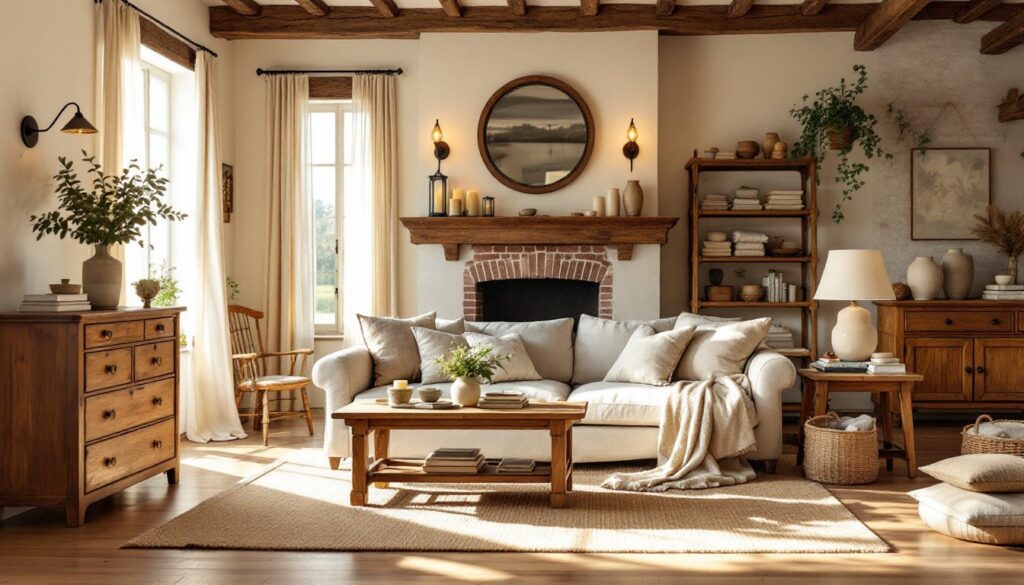
Texture is what transforms country spaces from plain to inviting. Layer different finishes: rough sawn wood beams against smooth plaster walls, smooth stone countertops next to a woven jute rug, glossy ceramic tiles beside matte wood cabinetry. This tactile variety engages the senses and creates visual warmth.
Wood is non-negotiable in country design. Exposed ceiling beams, hardwood flooring, wooden cabinetry, or timber frames all contribute character. If you don’t have original wood elements, adding them, like installing floating shelves in reclaimed oak or running wood wainscoting, makes an immediate impact. The wood doesn’t need to be pristine: imperfections and knots add authenticity.
Stone, brick, and plaster deserve space too. A exposed brick accent wall, stone fireplace surround, or plaster ceiling adds permanence and history. Even if your home doesn’t have original masonry, you can introduce materials strategically, a brick backsplash in the kitchen or stone veneer on a single wall creates focal points without major renovation. Natural fibers like jute, sisal, wool, and linen in rugs, upholstery, and window treatments tie everything together. These materials age beautifully and develop character with use, a win for a design aesthetic built on authenticity.
Lighting And Accessories That Define The Aesthetic
Lighting in country spaces should feel warm and personal, never clinical. Avoid recessed lights in grid patterns: instead, use layered lighting from table lamps, wall sconces, and pendant lights with fabric or metal shades. Edison bulbs or warm-white LEDs (2700K color temperature) create the soft, amber glow that country design demands. Candles in glass holders or lanterns add seasonal warmth and reinforce the rustic vibe.
Accessories make country style feel lived-in. Antique pottery, vintage gardening tools, old books, and handmade textiles tell a story. Avoid the staged “farmhouse” look where everything’s new but styled to look old, it reads as inauthentic. Instead, display objects you actually use or cherish: cookware, quilts, baskets, and collections gathered over time. Interior Design Trends 2026: covers how vintage-inspired accessories fit into current design conversations.
Keep accessories intentional. A shelf holding six meaningful items feels more country than a wall crowded with tchotchkes. Group items by theme or material, three sizes of stoneware crocks, a collection of vintage botanicals, or a cluster of brass candlesticks arranged on a dresser. Open shelving, glass-front cabinetry, and displayed collections become decorative elements themselves, turning functional storage into visual interest.
Adapting Country Style To Your Space
Country design adapts beautifully to different home types and budgets. In a small apartment, focus on materials and color rather than scale, a cream linen sofa, wooden floating shelves, and a jute rug establish the aesthetic without needing a sprawling farmhouse. Urban country works by concentrating elements: a single exposed brick wall, vintage accessories on open shelving, warm lighting.
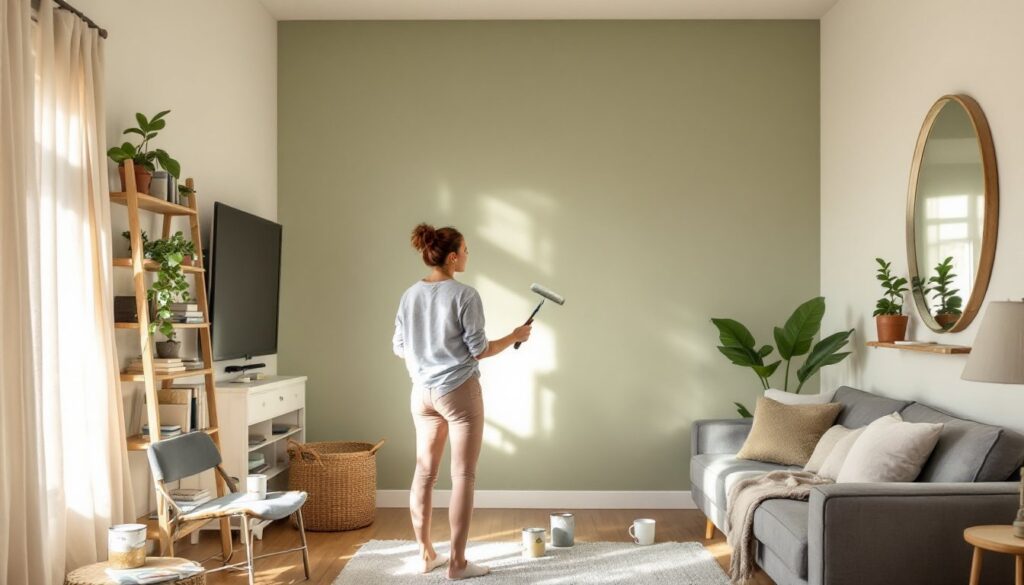
For budget-conscious updates, prioritize high-impact changes. Paint walls in warm neutrals (around $30–60 per gallon for quality paint: check coverage rates on the can before buying). Swap out lighting fixtures ($40–200 depending on style). These changes anchor the aesthetic without major expense. Thrift stores and online resale sites offer vintage pieces cheaply, an old wooden chair gets new life with a simple refinish or upholstery. Best Interior Design Ideas provides budget-friendly approaches to redesigns.
If tackling larger projects, consider what will age well. Hardwood flooring, quality cabinetry in wood, and solid countertops in stone or butcher block are investments that suit country style and reward longevity. Cosmetic updates like hardware, paint, and textiles refresh as tastes evolve. Don’t force the aesthetic into spaces it doesn’t suit, a tiny modern condo and a drafty Victorian cottage need different applications. The principle remains: authentic materials, warm colors, intentional layout, and accessories that reflect genuine use.
Conclusion
Country style endures because it prioritizes substance over trend and authenticity over perfection. The warmth, durability, and genuine beauty of natural materials create homes that improve with age rather than date quickly. Whether you’re refreshing a single room or planning a whole-home renovation, country design principles guide you toward choices that feel right and last through the years. Start with one element, a warm color palette, key furniture pieces, or lighting upgrades, and build from there. The result won’t be a magazine spread: it’ll be a home that actually works for living.